This interview was published in conjunction with the screening of Master of the House at SFSFF 2025
Few things are more frustrating to a silent film fan than hearing about the rediscovery and restoration of a lost film and, barring travel or the hope for a future DVD release, having no way of watching it. Inaccessibility has been the norm. Even now, when streaming has given us endless choices, the problem of silent film accessibility remains.
Digitizing and hosting films are time-consuming and expensive, beyond the means of most archives. Against the odds, the Danish Film Institute (DFI) has made it to the promised land, with every silent film currently in the institute’s collection, from actualities to international features, available to stream at Denmark on Film and its website dedicated to silents. More than 230 silent feature films, nearly 120 short films, and more than 60 incomplete films can be found at stumfilm.dk, many with English subtitles and all for free. DFI also has been instrumental in restoring other countries’ masterpieces, for example, contributing a good-quality nitrate print for the Cinémathèque française restoration of Abel Gance’s Napoleon.
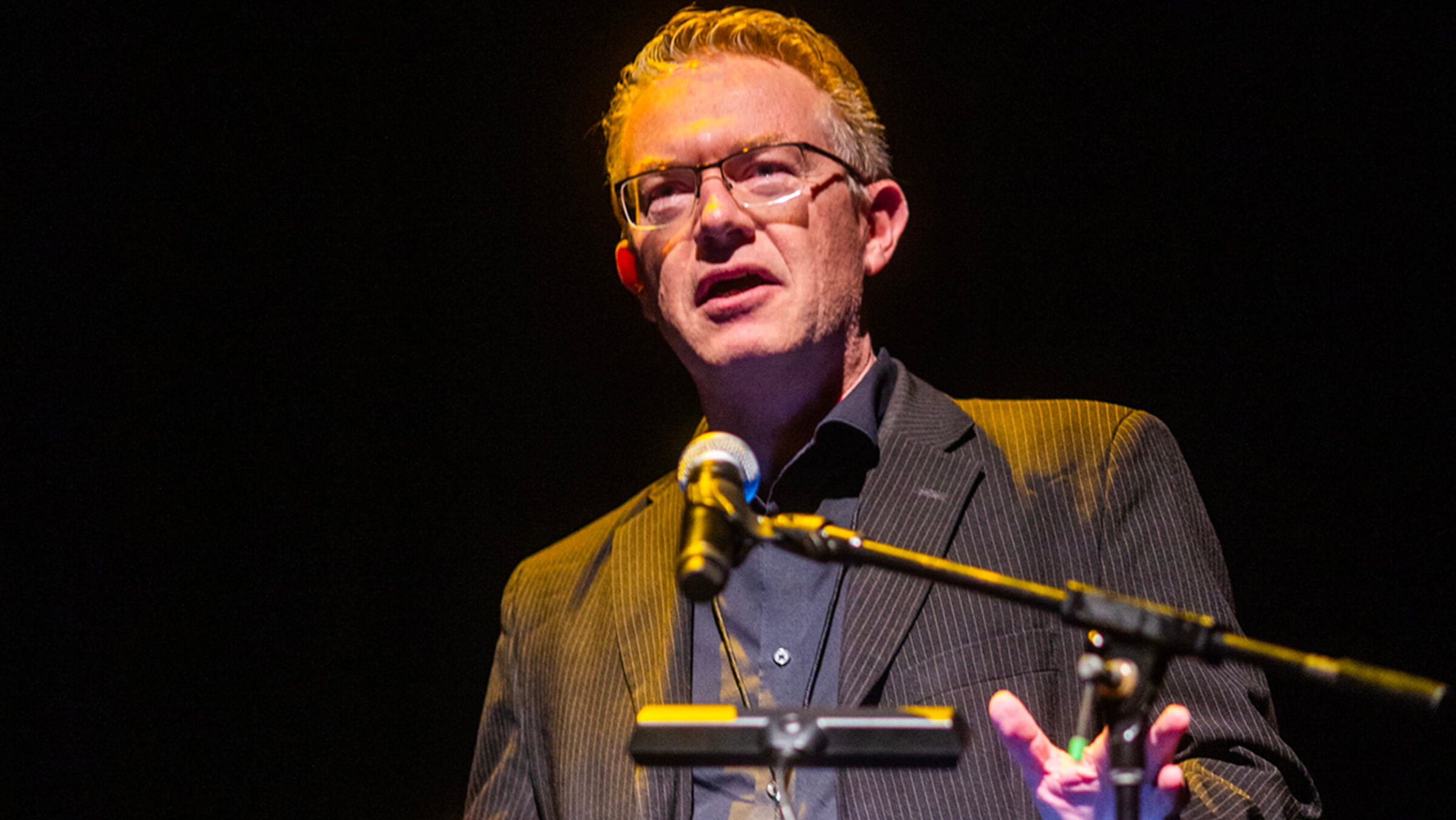
Much of the success of the Danish digitization effort can be attributed to the work of curator Thomas Christensen and his team. Christensen, who joined DFI in 1998, accepts this year’s SFSFF Award for commitment to the preservation and presentation of silent cinema for the vital work he’s done on behalf of the institute.
How is DFI able to make so many films accessible?
We’ve been successful in getting funding. I was involved in looking into our collections and pricing out how much survives and what it would cost to digitize it all. About twenty percent, some 450 to 500 short and feature films produced in the silent era in Denmark, survive. That gets you around 450 to 500 hours of theatrical-quality digitization. We were very fortunate to have three cultural-supporting foundations in Denmark provide a total of 30 million kroner, or 4 million dollars.
These are not all full restorations, but rather transfers to digital. We did a bit of dust removal and fixed presentation speeds, so there’s some post-work applied to those films. Fortunately, we also had enough time and resources to average five full restorations each year.
The business model with money up front, followed by free and open access, was first tried with Denmark on Film, a project that started with government funding. The silent film project is externally funded and has allowed us to double the staff and create a full 4K digital infrastructure. Everything surrounding it—my salary and other overall infrastructure—is government-funded. Hopefully we will be able to manage the increasing hosting costs moving forward.
Part of DFI’s online platform involves footage from Greenland. How did that come about?
There are three things in Denmark that are superhot content-wise: the Second World War, the royal family, and Greenland. So, it was an easy sell. We wanted to include material from both the Greenland National Archive and Museum in Nuuk and the Arctic Institute in Copenhagen, which is a private foundation. We digitized about a hundred hours from these sources, through a targeted grant from the Ministry of Culture.
What do you see as the strengths of Danish cinema in the silent era?
I think we have some of the best Dickens adaptations, certainly in the silent period of the early 1920s. They’re directed by A.W. Sandberg, a solid director who was also artistic director for Nordisk Film from 1920 until the mid-’20s. If you look at his films, they’re super lavish.
In a sense, Danish silent films were great too early, leading the world from 1908 until the First World War. Nordisk Film created a vertically integrated studio system. In 1914 to 1916 they produced fifty feature films and a hundred short films per year. They controlled the distribution as well, owning sixty theaters throughout the main markets in Europe. At the end of WWI, Nordisk Film in Germany became one-third of Ufa. In that sense, Danish cinema is part of what makes German cinema in the 1920s a great cinema.
Danish cinema was very much based on delivering quality, popular products. When the wider market was lost, Denmark couldn’t put in the budgets they used to. Swedish silent cinema peaks after Denmark, and it’s often their films—the Sjöströms and Stillers—that tend to screen more today. Danish films, though often fantastic, were created at a time when film as art was not fully established.
Is there a particularly memorable film restoration you have worked on?
It has been a great privilege to be able to work with Dreyer’s silent films. Master of the House is an absolute delight. It’s a feminist film reminiscent of The Taming of the Shrew, only with the genders reversed. Recently, we restored Vampyr, a sound film with the mood of a silent film. And The Joker, a 1928 “Euro-pudding” film—Danish/German coproduction, German director, British male lead, French female lead. That is an absolutely gorgeous film with a James Bond-ish vibe.
What do you find uniquely satisfying about the digitization project?
We didn’t have to prioritize based on popularity or what might be regarded as art. Being able to do everything allows you to find interesting things in the big bulk of the surviving twenty percent. For example, it has been fantastic to work with Asta Nielsen’s films. She’s famous for being this great melodramatic actress, but I think she’s fantastic as a comedienne. There’s one little comedy, ABC of Love, in which she thinks her fiancé is too much of a wuss. She puts on a tuxedo, and they go to town together so she can teach him how to behave with women. Of course, all of the women hit on her instead of him. So, while we did prioritize resources and quality levels, it has been greatly satisfying to, in a sense, finish the job and tie the bow on Danish silent cinema as the gift to film lovers everywhere.