
In Bill Morrison’s dazzling Dawson City: Frozen Time (2016), he records how, by the close of the 1920s, the once-booming gold rush town of Dawson City was a site of erasure—the intrepid ’98ers were long gone and all that remained were a few old-timers, fading into history as a younger generation worked to secure its future. Most of the saloons and the brothels—those gold mines that built many an American fortune—had fallen into ruin and what riches remained were now safely deposited in the vaults of respectable banks. When Clifford Thomson arrived there in 1928 to take up a position at the Canadian Bank of Commerce, he was faced with the challenge of clearing out remnants of the more recent past: hundreds of film reels, orphaned by their studios in this “end-of-the-line” town.
While he mulled over how best to solve the problem of storing abandoned nitrate, in distant Los Angeles MGM was gearing up to unveil its retelling of Dawson’s past, The Trail of ’98. A grand epic of the Klondike gold rush, it featured reconstructions of the arduous trek up the Chilkoot Pass, spectacular scenes of avalanches, and censor-baiting depictions of wild escapades in the town’s brothels and saloons. Helming this ambitious production was the studio’s hotshot director, Clarence Brown, late of the Maurice Tourneur company. As Brown got to work on a super-production that would reconstruct the past, the citizens of Dawson City—having received word that Hollywood had no interest in reclaiming its reels—used the canisters of films as filler for their local ice rink.
If the tangible remains that helped make Hollywood’s fortune could be easily discarded, recreating history took time and money. Even before the cameras started rolling on The Trail of ’98, in March 1927, it had established quite the footprint. B.P Schulberg had acquired the rights to Robert Service’s eponymous novel in 1921, but sold them soon after to director Frank Lloyd, who in turn sold them to MGM, whose head of production, Irving Thalberg, then looked to United Artists to secure Clarence Brown, fresh off The Eagle, to direct. Plans to borrow him were superseded when the studio signed Brown to a long-term contract, inaugurating an association that lasted twenty-seven years.
Intended as his MGM debut, Trail of ’98 was put on ice when Brown was assigned Flesh and the Devil, featuring his old friend John Gilbert and rising star Greta Garbo. That film exceeded all expectations and the studio reasoned that if Brown could handle two sensitive stars and some tricky location work, he would be the perfect man to tackle something even more ambitious. The Trail of ’98, the studio boasted, would be the epic to top The Big Parade and Ben-Hur. As it turned out, comparisons with Ben-Hur proved apt as Trail quickly deteriorated into a nightmare production for all involved.
Shortly before Brown set off for filming in Colorado, and the second unit journeyed to Alaska, ominous signs were emerging. Brown’s producer, Hunt Stromberg, was famed for his fixation on making movies with universal appeal, suitable even for the “dumb Scranton miner.” Throwing everything into the mix was often considered the best strategy. Assigned screenwriters Benjamin Glazer and Waldemar Young initially seemed good choices: Young in particular had been a San Francisco-based newspaperman and had witnessed the stream of hopeful prospectors departing on steamers in 1898. The writers had extensive resources at their disposal, collected by MGM’s meticulous research department, which included original photographs, letters, advertisements, and on-the-payroll “sourdoughs” who furnished colorful tales. Stromberg wanted authenticity but he also wanted “heart,” and he reminded them at every turn what was at stake in this story: “a beautiful, delicate soul, the soul of a woman … sacrificed on the altar of … GOLD! KLONDIKE! GOLD!”
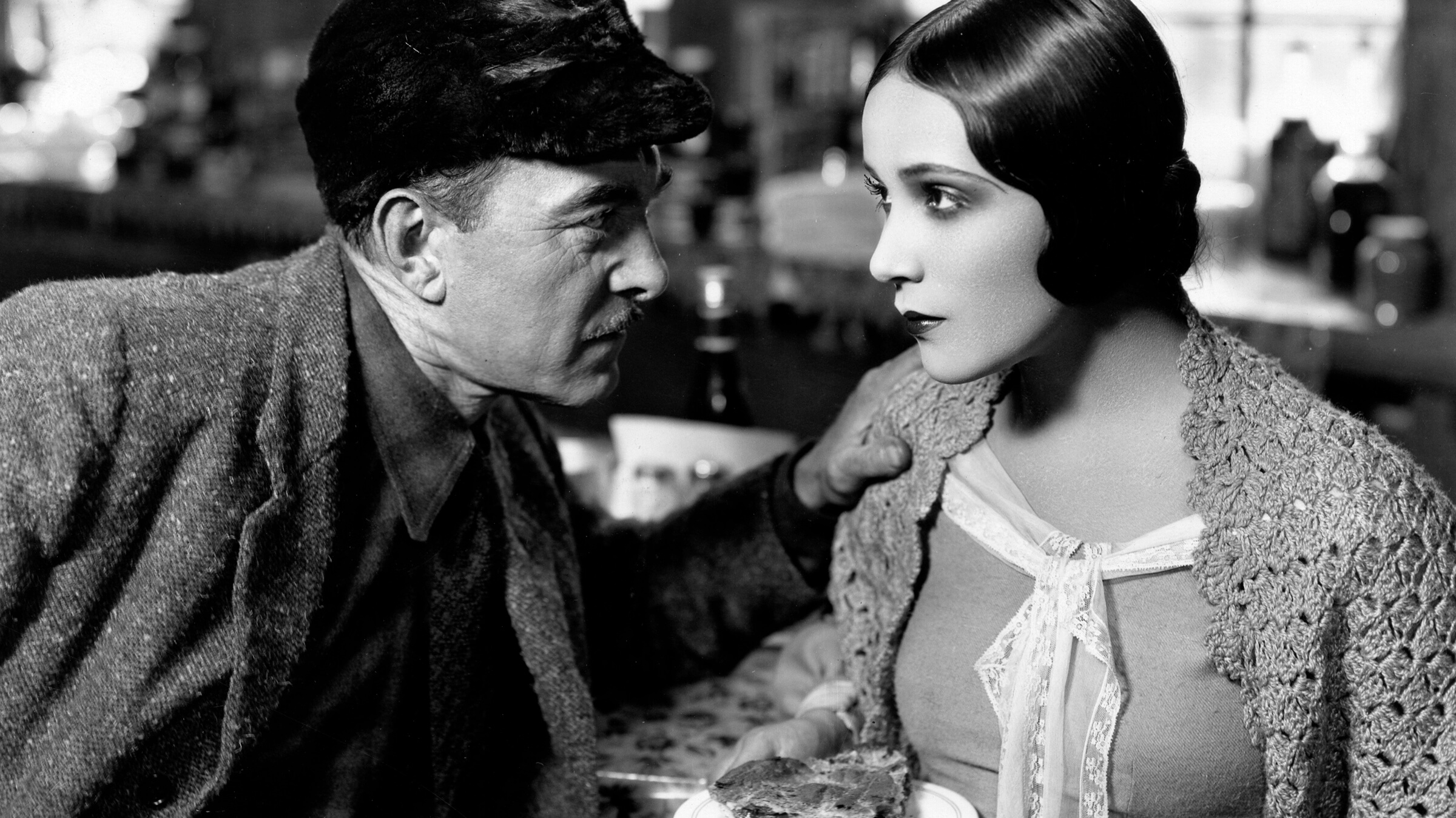
Cast as the delicate soul was Dolores del Rio, a decent enough actress and certainly a great beauty, but whose talents left Brown unimpressed—reportedly, he had hoped for Pauline Starke. Brown was again disappointed when the role of Larry the love interest was taken, not by John Gilbert, but by the rather underwhelming Ralph Forbes. Though not an unknown—he had recently appeared with Lillian Gish in The Enemy and Ronald Colman in Beau Geste—Forbes was the kind of actor that delivered adequate but dull performances. Unfortunately for him, Brown took a vehement dislike to him, later telling Kevin Brownlow that he was “the lousiest leading man that ever lived” and sneering that the makeup department had to glue hair on his chest to make him “look a man.” Relying on Del Rio and Forbes for “the heart,” then, was risky. Stromberg’s strategy included adding Karl Dane and Tully Marshall for comic relief, which the former did by playing a dumb Swede mangling the English language (think “yune-bugs” and “by yimminy”). Harry Carey was also drafted in and expertly delivered a portrait of the devilish villain, Jack Locasto. It was these reliable character actors, alongside a considerable cast of animals (sled dogs, goats, donkeys), that held Brown’s interest and, in turn, garnered the most praise from critics.
Two decades later Brown endured unrelenting heat and ferocious insects when he shot The Yearling in Florida, but in 1927 he was battling unrelenting cold and altitude sickness in Colorado. The misery of the main unit was nothing compared to that of the Alaskan unit, which contended with extreme cold, terrible living conditions, and dangerous lapses in safety, resulting in the loss of at least four stuntmen.
The Trail of ’98 was launched in a ritzy premiere at Sid Grauman’s Chinese Theatre on May 7, 1928. There could be no more fitting master of ceremonies: Grauman had been one of the hopefuls that had joined the 1898 procession to the Klondike, and it was in the saloons of Dawson he learned how to stage live performances. For Trail, he devised an elaborate prologue featuring an Alaskan dancehall. Once it finished, the set gradually parted to reveal the so-called “Fantom Screen,” a newfangled widescreen technology, emblazoned with the MGM logo. Audience expectations that evening must have been high, but Trail left many deflated. It divided critics, too. Photoplay praised this “mighty panorama of the Alaskan gold rush” and noted it was a “purely director’s picture,” but, in The Film Spectator, Welford Beaton complained that Trail was proof positive that a budget of millions can be easily squandered when the director loses their grip on what is important: a coherent story and believable characters.
MGM’s epic of the gold rush cost—and lost—a fortune. It was also a victim of bad timing as silents faded out and sound was in vogue. Invariably, its failure took some of the shine off Brown and in an interview with Brownlow in the 1960s, he dismissed the film as “just one of those conglomerates.” While Trail certainly has its flaws, among them weakly drawn characters, a less-than-charismatic performance by Forbes, and a plot made up of multiple stories only loosely interwoven, the film displays bursts of energetic filmmaking and visual inventiveness. Brown’s apprenticeship as an editor, and his avid viewing of newsreels, is evident in the dynamism of the prelude that brilliantly captures the frenzy that results from the announcement of gold in the Klondike. The enduring influence of his mentor Tourneur, as well as the expertise of the film’s cinematographer, the great John Seitz, surfaces in the stylized lighting, the dark foregrounds, of early scenes. The rape scene unfolds with a palatable sense of dread but with gratuitousness avoided. Finally, Brown drew on his engineering background—which also helped him to solve some logistical problems when shooting the bleak Chilkoot Pass trek—to create a memorable tracking shot that succinctly and evocatively captures the individual faces, and their implied stories, of the many prospectors aboard the steamer (this shot became something of a signature one for Brown, who repeated it in 1931’s Possessed.)
Just eighteen months after Trail of ’98, MGM released its last silent film and the artform was consigned to history. But sometimes what is submerged, reemerges. Fifty years after those neglected reels began a new life as filler, construction crews working in Dawson City unearthed them. Among them, an incomplete print of A Girl’s Folly, directed by Maurice Tourneur in 1917 with the aid of his young apprentice, one Clarence Brown.