
January 1
For her Harvard fellowship, twenty-four-year-old English-born astrophysicist Cecilia Payne publishes data revealing the universe’s most abundant element by far is hydrogen, upending bedrock science. She is obliged to insert a line that her results are “almost certainly not real” by an expert in the field who reaches the same conclusion two years later in his own paper.
January 3
Six months after ordering the kidnapping and assassination of Veneto representative Giacomo Matteotti for calling out election fraud, Benito Mussolini speaks before the Italian Chamber of Deputies, daring them to remove him from power. They cheer him instead.
January 5
Nellie Tayloe Ross takes the oath in Wyoming to become the first woman governor in the United States. Miriam A. Ferguson becomes the second on the 20th, when she’s sworn in in Texas. Both succeed their husbands in office.
January 24
At 9:11 a.m., a total eclipse of the sun bisects Manhattan at 96th Street into darkness and daylight. Braving single-digit temperatures and twenty-seven-and-a-half inches of newly fallen snow, twenty-five airplanes and one dirigible are already above the clouds with fifty-plus scientific observers. For a New York Times reporter, the flight brings to mind the war, but instead of mounted guns “ready to spray death and destruction,” they aim cameras. Less than three hours after landing, motion pictures begin showing on Broadway. A set of films is immediately flown to the West Coast in a trial run for the U.S. Air Service, which officially forms in February.
January 25
The second coup in as many years overthrows the September Junta in Chile, returning exiled liberal reformer Arturo Alessandri briefly to power.
January 26
Fifty-eight-year-old revolutionary leader Sun Yat-sen undergoes exploratory surgery for an abdominal cancer that kills him less than two months later when the fragile alliance between Chinese communist and nationalist forces ruptures.
February 2
The final relay of twenty dogsledding teams arrives in Nome, Alaska, carrying vials of a lifesaving antitoxin for a diphtheria outbreak that has already killed two of the town’s children. Volunteer mushers risk their most valued champions —Blackie, Fox, Balto, and Togo among them—to cross 674 miles through freezing cold, blinding winds, and shifting terrains. By the end of the year, Balto has a film and tours vaudeville and the twelve-year-old Togo gets honored by Arctic explorer Roald Amundsen at Madison Square Garden. In May, Amundsen goes missing for one month trying to reach the North Pole by plane.
February 21
New Yorker magazine is published for the first time and features the zingy prose of Algonquin Roundtable regulars Dorothy Parker and Alexander Woollcott who sprinkle their coverage of current events and culture with grievances about Prohibition. Greed (“unrelenting and sordid”), The Lost World (“pallid”), and The Salvation Hunters (“deadly monotonous”) get pans and The Last Laugh gets a rave (“Never have we seen the camera made so pliable for moods and moments”).
February 26
President Calvin Coolidge establishes Glacier Bay in the Alaskan territory as a national monument after a yearlong delay to consider the objections of timber, mining, and agricultural interests. The Huna Tlingit, who have called the area their home for millennia, are not consulted.
March 1
Survey Graphic, an illustrated edition of a monthly social-issues magazine, solidifies Harlem as the center of a thriving renaissance. It is edited by Alain Locke who combines the writings of Countee Cullen, W.E.B. Du Bois, Langston Hughes, Elise Johnson McDougal, Claude McKay, Eunice Robert, Arturo Schomburg, and others with artwork by Winold Reiss. Locke expands its contents to include fiction and the drawings of Aaron Douglas for his landmark book, The New Negro, published in December.
March 5
Over the objections of the Lakota, the governor of South Dakota authorizes the transformation of Six Grandfathers into a monumental sculpture of four former U.S. presidents.
Mach 10
During production of the film adaptation of his novel The Joyless Street, prolific Austrian author Hugo Bettauer is shot multiple times by a Nazi dental technician and dies sixteen days later.
March 18
A massive tornado cuts a deadly swathe across two hundred miles of three Midwestern states, taking out entire towns, killing nearly seven hundred, and injuring two thousand more. Murphysboro, Illinois, is the hardest hit with a third of the total fatalities that include twenty-five children in school at the time. Storekeeper Isaac Karnes, of Caldwell, Illinois, suffers the loss of eleven family members, among them his wife and seven grandkids.
March 29
The Diet of Japan recognizes suffrage for men over twenty-five and abolishes a minimum tax requirement to vote, quadrupling the electorate. The Women’s Suffrage League re-girds itself for the continuing fight. Twenty-one-year-old camera assistant Yasujiro Ozu is about halfway through his one-year obligatory military service.
April 10
“They were careless people … they smashed up things and creatures and then retreated back into their money or their vast carelessness or whatever it was that kept them together, and let other people clean up the mess they had made.” F. Scott Fitzgerald’s era-defining novel, The Great Gatsby, is published. It wins no prizes and fails to sell out its first printing. On the 26th, Edna Ferber’s So Big garners a Pulitzer having already been turned into a Colleen Moore vehicle. In Russia, Tsaritsyn is renamed Stalingrad, a year and two months after Lenin’s death.
April 12
Four years after expelling Spain from the Rif, Amazigh leader Abd el-Krim launches a successful assault on the French Protectorate of Morocco. In September a joint Spanish-French amphibious landing with air support, the first of its kind, led in part by Colonel Francisco Franco, exposes fatal vulnerabilities.
April 14
Twenty-eight-year-old Madge Oberholtzer dies from a staph infection and mercury poisoning (taken in a suicide attempt), but not before detailing the two-day sexual assault she suffered in March at the hands of the Indiana Klan’s Grand Dragon.
April 18
The Women’s World’s Fair opens in Chicago to showcase their accomplishments in the arts, sciences, and industry. Highlights include Black inventor Lillian Tolbert’s pitcher with an ice core to cool drinks. In September the fourth annual Exposition of Women’s Arts and Industry opens in New York City, featuring a re-creation of an “old-timey” garment sweatshop.
April 28
Dedicated to “an aesthetic renewal of form,” the six-month-long Exposition Internationale des Arts Décoratifs et Industriels Modernes opens in Paris. There is a Soviet Pavilion, with interiors by Aleksandr Rodchenko, but no German or American one. Le Corbusier and Pierre Jeanneret’s open-plan dwelling, Pavillon d’Esprit Nouveau, is too modern for organizers who initially erect a fence to hide it from view. Rodchenko buys a Debrie Sept handheld camera for himself and sends two back home for Aleksei Gan and Dziga Vertov.
May 1
The mausoleums at Medina’s sacred Jannat al-Baqi cemetery are destroyed by order of Ibn Saud who continues to aggressively extend his Wahhabi Islam-only kingdom on the Arabian Peninsula.
May 3
At a sold-out Sunday matinee, nine hundred Berliners watch the abstract films of Hans Richter, Viking Eggeling, Walther Ruttmann, Fernand Léger, and René Clair, as well as Hirschfeld-Mack’s colored-lights show. Richter later says that “Der absolute Film,” which had an encore presentation the following week, “proved that we belonged to something.”
May 5
Afrikaans replaces Dutch as the official language of South Africa even as Zulu is spoken by many more people.
May 8
Arturo Schomburg’s collection of African literature, art, volumes of history, and American slave narratives gets a permanent home at a Harlem branch of the New York Public Library.
May 14
Virginia Woolf’s stream-of-consciousness novel Mrs. Dalloway is published. “I wonder,” she writes in her diary upon its completion, “if this time I have achieved something.”
May 16
Six million listen as longshot Flying Ebony wins the fifty-first Kentucky Derby by one and a half lengths in the running’s first ever radio broadcast. Churchill Downs is soaked by a rainstorm before post time but the dark bay is an excellent mudder. Sportswriter Bill Corum refers to the race as “the run for the roses” and it sticks.
May 29
“You need have no fear of any failure,” reads Percy Fawcett’s final letter to his wife before he, his son, and his son’s best friend disappear into the Brazilian Amazon in search of the remains of an ancient civilization. The British explorer logs the wrong coordinates to throw off competitors. Sometime this year, a thousand miles away in Cataguases, future godfather of Cinema Novo Humberto Mauro trades a stamp collection for a Baby Pathé to make the four-minute calling card film, Validão, o Cratera.
May 30
Forty-four gunshots kill eleven demonstrators and injure twenty more when Shanghai police open fire at a gathering indignant over the arrest of striking workers at a Japanese-owned factory. Protests grow and violence crescendos in the dead of a June night when a British warship fires at a hundred thousand Hong Kongers occupying the streets in solidarity.
June 2
At Yankee Stadium Lou Gehrig pinch-hits for an ailing first baseman against the Washington Senators to begin a 2,130 consecutive-game streak. With wartime expenses waning, Congress reduces the income tax rate by twelve percent for the highest bracket and half a percentage point for the lowest.
June 13
In Washington, D.C., engineer Charles Francis Jenkins demonstrates a radio transmission of moving images taken of a miniature Dutch windmill. Three months earlier at London’s Selfridges, Scotsman John Logie Baird demonstrated his transmission of a silhouette.
June 26
The Little Tramp’s long-awaited return to the silver screen premieres in Hollywood. Variety writes that The Gold Rush “is certain to cause a veritable riot at the theatre box offices.”
June 29
A nearly seven-point earthquake kills thirteen and requires the rebuilding of Santa Barbara’s downtown. The earthen dam nearby collapses, releasing all thirty million gallons of its water. No fires break out as quick-thinking workers shut off gas and power.
July 4
Forty-four celebrants die when the Pickwick Club in Boston’s Chinatown collapses after having been pronounced safe by a city inspector just two days prior. The Charleston gets the blame.
July 6
Only one reporter witnesses the arrival of Mauritz Stiller and Greta Garbo to New York City.
July 10
At the end of a courtroom drama playing out in the country’s first radio broadcast of a trial, John T. Scopes is fined $100 for violating a Tennessee ban on the teaching of evolution. During the high heat of summer Clarence Darrow and William Jennings Bryan sparred over reason and religion on the courthouse lawn while performing chimps entertained onlookers during breaks. Meanwhile at her Los Angeles megachurch, evangelical preacher Aimee Semple McPherson held all-night vigils praying for a Bryan victory. Science ultimately won, however, with his damning confession: “I do not think about things I do not think about.”
July 26
El Universal announces that a young beauty from an aristocratic Durango family is leaving home to begin a movie career contracted to U.S. director Edwin Carewe. An illustrated November edition of the trade magazine uses a portrait of Dolores del Rio taken by Italian-born photographer and future antifascist militant Tina Modotti to celebrate the upcoming release of the starlet’s debut in Joanna. Already in Hollywood, former Mexican revolutionary and busboy Emilio Fernández is working as an extra.
August 3
One of Bronislava Nijinska’s first shows since resigning as choreographer for Ballets Russes opens at the Winter Garden in Margate, England. Plotless and performed to Bach on a spare stage, Holy Études was created in close collaboration with a friend from Kyiv, Constructivist artist Alexandra Exter. Dancers wear brightly colored, shield-like cloaks that hide their entire bodies when their backs are turned to the audience, forming a kind of living set.
August 8
Using D.W. Griffith’s The Birth of a Nation as a recruiting tool, the Ku Klux Klan has grown to three million adherents nationwide and an estimated forty thousand show up in white hoods to march down Pennsylvania Avenue and picnic with their families. In South Dakota, the Deadwood chapter celebrates the life of recently deceased three-time presidential candidate William Jennings Bryan as “the greatest Klansman of our time.”
August 16
The first of eight profitable films Tod Browning and Lon Chaney make together for MGM, The Unholy Three premieres.
August 25
Civil rights activist A. Philip Randolph founds the Brotherhood of Sleeping-Car Porters to press for reforms to Pullman’s labor practices that include requiring a minimum of four hundred hours of clocked time to collect a monthly wage and no chance of advancement for Black employees.
August 28
The first of three films inspired by German illustrator Heinrich Zille premieres in Berlin. Lichtbild Bühne’s reviewer writes of the Gerhard Lamprecht-directed Die Verrufenen (literally, The Outcasts”): “Today, the floor is not given to the critic, hardened by a thousand good films and many more bad ones, but to the person deeply moved to the core.”
August 31
Margaret Mead lands in American Samoa for nine months of anthropological fieldwork. The resulting films and books will prick the world’s consciousness about indigenous peoples.
September 3
The USS Shenandoah is midflight on an exhibition tour over an area of Ohio known for sudden seasonal thunderstorms when it gets caught in an updraught and soars above the pressure limits of its helium gas cells that recently had half their safety values removed. Turbulence tears the dirigible apart and it crashes in three pieces, taking the lives of thirteen crew members and its commander. Twenty-nine survive thanks to their own courage and ingenuity. After an inquest determines no one is at fault, a founding officer of the U.S. Air Service, Billy Mitchell, is court-martialed then removed from duty for accusing higher-ups of having put “publicity before prudence.”
September 9
Dr. Ossian Sweet, his wife, and nine of their family and friends are arrested for murder after standing their ground when violent agitators surround the Sweet home in a predominantly white neighborhood in Detroit and one white man dies. At the behest of the NAACP, Clarence Darrow takes the case and, in November, defends his clients in front of an all-white jury: “prejudice[s] come with your mother’s milk and stick like the color of the skin.”
September 14
Samson Raphaelson’s first play, about the son of an Orthodox cantor, opens at New York’s Fulton Theatre. Under contract to Warner Bros. at the time, Ernst Lubitsch sees it and later moves to buy the rights.
September 17
A streetcar in Mexico City crushes an oncoming bus rounding a corner in front of San Juan Market. Among the casualties is eighteen-year-old Frida Kahlo. Already weakened by a bout of polio at age six, she learned how to keep moving to grow stronger. This recovery requires her to remain still.
September 22
Sunny, the first collaboration of lyricist Jerome Kern and composer Oscar Hammerstein III, opens on Broadway and runs more than five hundred performances at the New Amsterdam.
September 27
“All was fine” reads a postcard received by a colleague in the British Secret Intelligence Service from the Odesa-born, one-time anti-tsarist radical Sidney Reilly who is not heard from again. Known as the Ace of Spies and Ian Fleming’s inspiration for the womanizing 007, Reilly is credited with securing a major Persian oil concession for England and forging the Zinoviev Letter that implied the Labour government was a Communist puppet just before their party’s catastrophic loss in UK’s 1924 elections. “It’s a fake, but it’s the result that counts,” he says. The USSR later claims Reilly was shot crossing into Finland, but it is Stalin who orders the execution, carried out in November in a forest outside Moscow.
October 2
La Revue Nègre begins its three-month run at Théâtre des Champs-Élysées in Paris. Choreographed by lead dancer Louis Douglas, it features Claude Hopkins’s orchestra, the Charleston Babies, and singer Maude De Forrest against painter Miguel Covarrubias’s stylized New York skyline and giant-fruit backdrops. Josephine Baker upstages it all performing in nothing but feathers. A critic writes, “We haven’t had this much feeling of a bursting forth since the Ballets Russes.”
October 5
Carl Dreyer’s last silent film made in Denmark premieres. Master of the House plays three straight weeks at the Copenhagen Palads. Its success the following year in France leads to the financing of his masterpiece, The Passion of Joan of Arc.
October 6
An audience at the Waldorf Hotel listens to electrically recorded music on an Orthophonic Victrola for the first time. Selections include “Soldiers’ Chorus” from Faust sung by forty voices and pianist Alfred Cortot’s rendition of Schubert’s “Litany.” Bessie Smith, Art Gillham, and the Philadelphia Symphony Orchestra recorded electrically earlier in the year but both Victor and Columbia agreed to hold off on promoting the new technology’s improved tonal range until selling off their acoustically recorded backlogs.
October 31
With the consent of the constituent assembly, modernizer Reza Pahlavi topples Ahmad Qajar as shah of Persia, ending the 136-year-long dynasty to start his own.
November 1
Buster Keaton’s sixth independent feature premieres. Chicago Daily News reviewer Carl Sandburg writes: “It seems rather silly to say that any screen comedy will leave unforgettable impressions on you, but that seems exactly what Go West is likely to do.”
November 5
King Vidor’s antiwar opus The Big Parade, starring John Gilbert and Renée Adorée, its extras WWI vets who served just a few years prior, premieres at Grauman’s Chinese Theatre. It goes on to handily best other 1925 films at the box office, including The Gold Rush, The Freshman, Fairbanks in Don Q, Pickford in Little Annie Rooney, Valentino in The Eagle, and, for a time, its closest rival, Ben-Hur.
November 9
The Schutzstaffel (SS) is officially formed on the second anniversary of Adolph Hitler’s failed Beer Hall Putsch. Released from custody in late 1924 after serving nine months of a five-year sentence for treason, Hitler is having a busy year, beginning in February when he convinces Bavarian authorities to lift the ban on the Nazi Party and starts calling himself Führer. In July he publishes his prison manifesto outlining the “path of legality” to gain power. At a Wisconsin meeting of the National Academy of Sciences, Nobel laureate Robert A. Millikan coins the term “cosmic ray,” inaccurately but indelibly naming the particles that travel at high velocity across galaxies carrying blueprints to the universe.
November 12
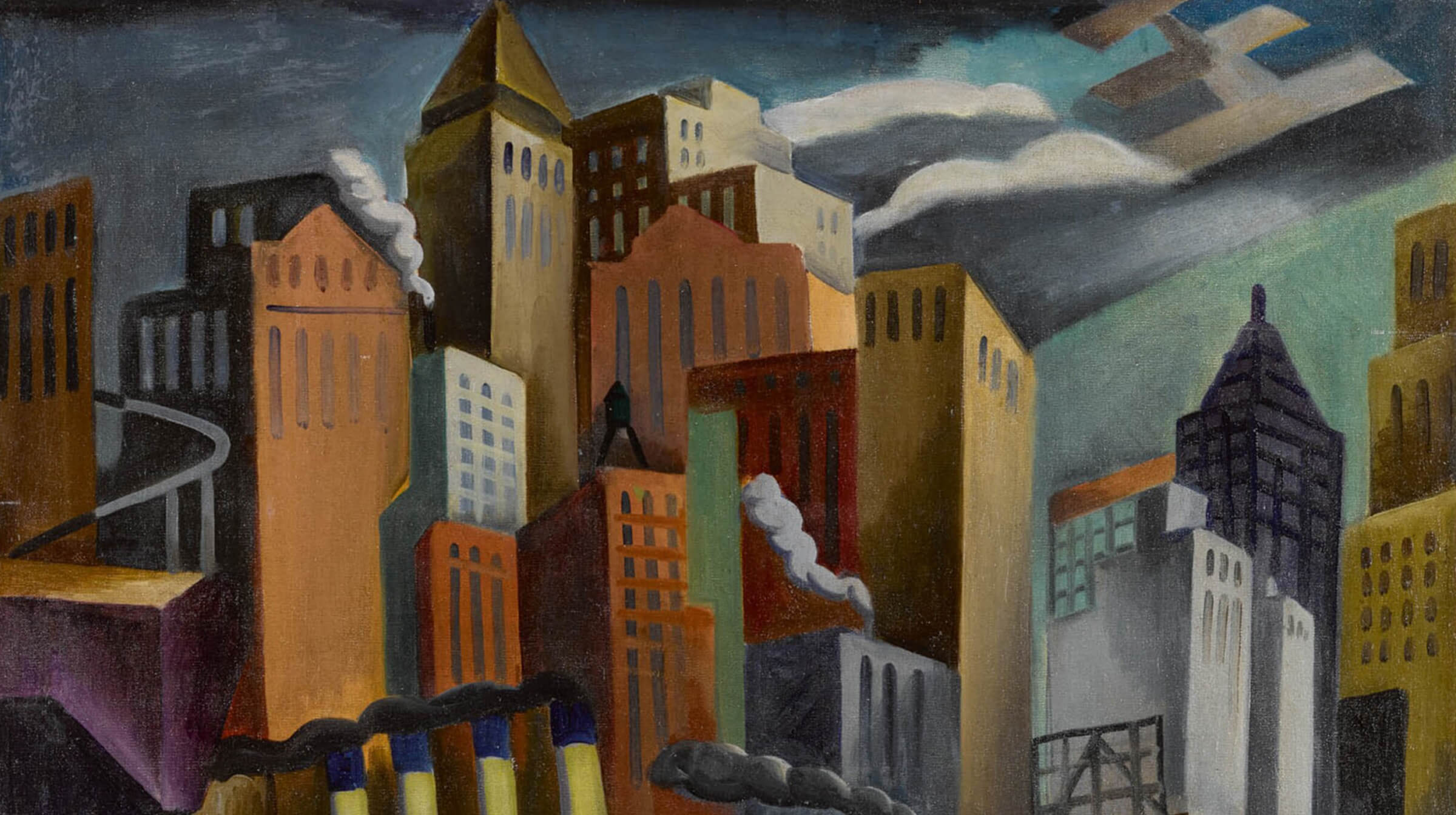
John Dos Passos’s Manhattan Transfer is published. Earlier in the year, New York overtook London as the world’s most populous city, a ranking it held for a century.
November 14
The first Surrealist art show opens at the Galerie Pierre on Paris’s Left Bank with work by Giorgio de Chirico, Max Ernst, Paul Klee, André Masson, Jean Miró, Pablo Picasso, Man Ray, and Jean Arp. Its pamphlet is written by poet Robert Desnos and trained psychiatrist André Breton whose manifesto the year prior advocated accessing the unconscious mind to create art. In Barcelona, at his first solo exhibit, Salvador Dalí garners praise for his realism.
November 15
Broadway sensation Paul Robeson makes his motion picture debut in Oscar Micheaux’s thirteenth feature, Body and Soul, which premieres at two Harlem theaters simultaneously. In Los Angeles, Cecil B. DeMille’s first time in the director’s chair as an independent producer, The Road to Yesterday, also premieres. Critic Edwin Schallert calls the film’s trainwreck “the most realistic that has ever been filmed.”
November 20
Orochi, about a hot-headed but well-meaning samurai and one of the first independent productions of superstar Tsumasaburo Bando, opens across Japan.
November 23
The St. Louis-Dispatch runs an ad announcing a Missouri Rockets appearance in the prologue for Stage Struck, starring Gloria Swanson. Inspired by London’s Tiller Girls, the kickline of sixteen precision dancers has been performing at the Missouri Theatre since October and later will move to New York as the Roxyettes.
November 25
MGM’s twenty-six-year-old head of production Irving Thalberg suffers a near-fatal heart attack. Soon after, he is reviewing an edit of Ben-Hur as it is projected on the ceiling above his sickbed in preparation for a December premiere.
December 1
The Treaty of Locarno is signed settling lingering postwar border disputes with limited pledges that any further conflict be addressed by diplomacy. Sometime this month, after her first solo show in Milan, a young Polish painter, who signs her distinctive portraits that will become synonymous with Art Deco as a man, begins signing as Tamara de Lempicka.
December 8
Alexander Woollcott writes that “the old Lyric shook with unaccustomed laughter” about the Broadway opening of The Cocoanuts, set against the Florida land boom and starring the Marx Brothers. Just after Christmas, Tip-Toes, with the same setting, opens at the Liberty. Both are films by the end of the decade.
December 21
Eight months after his debut feature Strike reinvented cinematic language (with the help of editor Esfir Shub), Sergei Eisenstein premieres his second. Battleship Potemkin becomes the first movie to screen at Moscow’s Bolshoi, meanwhile the director is backstage editing its final reels. In Berlin, MGM and Universal execs jockey to bail out Ufa, Germany’s biggest studio already sinking from debt even as Metropolis is still mid-production.
December 25
In a rare Christmas Day soccer match in Buenos Aires, Brazil quickly gains a two-zero lead against defending champions Argentina in the final game of an intracontinental tournament that later became known as Copa América. When Ramón Muttis blatantly fouls Brazil’s star forward Artur Friedenreich, a brawl breaks out between the teams and fans spill out from the stands of the Estadio Sportivo Barracas to join the melee. Police intervene so the game can resume and it ends in a draw. Argentina holds its title and its fans rain stones down on the Brazilian players. Indignant Brazilians back home take to the streets and the country withdraws from future tournaments over what gets dubbed the War of the Barracas. The rivals don’t meet again on the pitch for another twelve years.
December 31
Americans gather around their radios to listen to regional broadcasts relayed from coast to coast of church bells ringing out 1925 and welcoming 1926. The next day the second ever transatlantic broadcast transmits the sound of London’s Westminster chimes to listeners across the pond.