
This feature was published in conjunction with the screening of Hula at SFSFF 2026
VAMPING IT UP
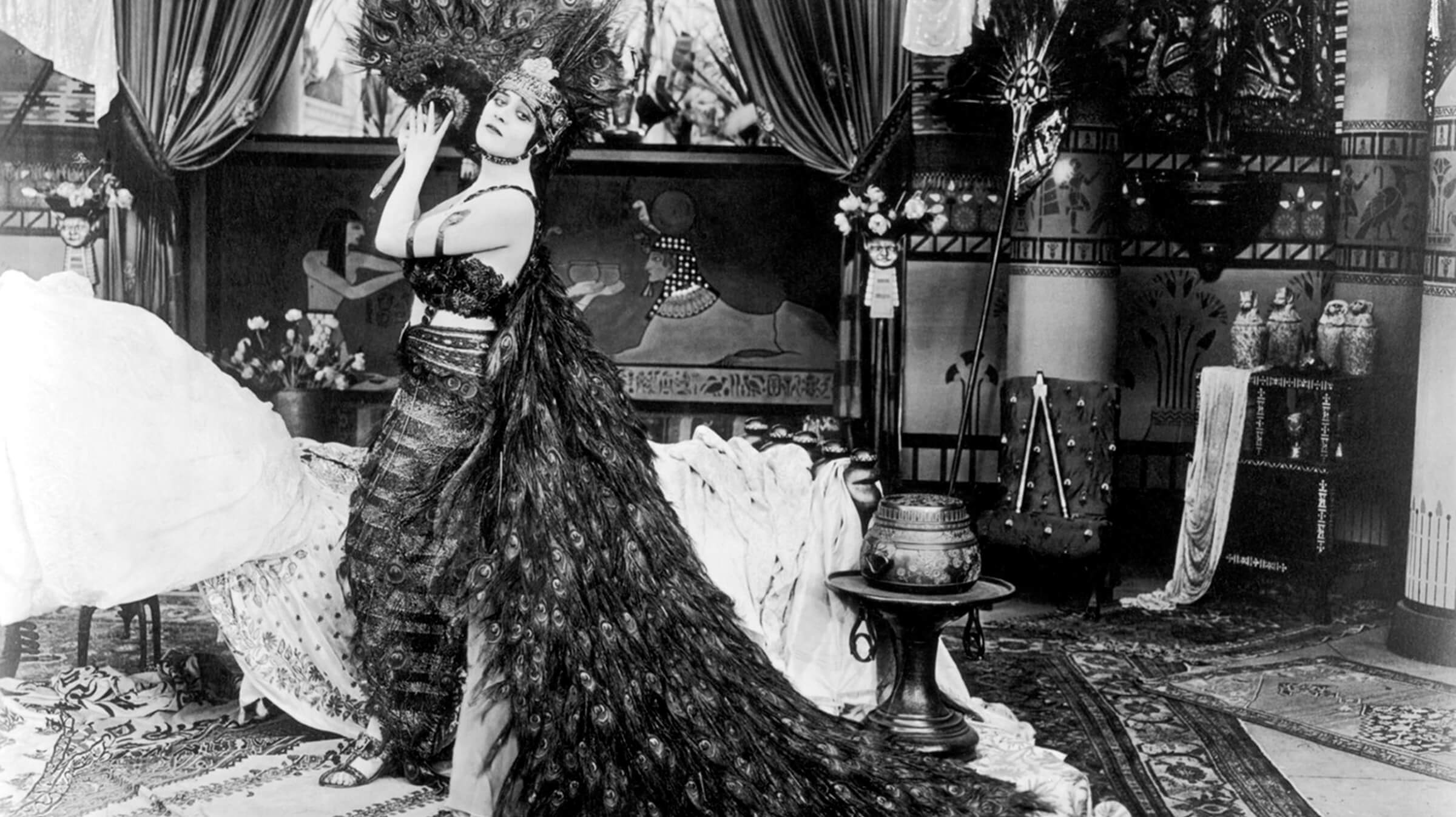
The vamp craze took the movies by storm in the tumultuous mid-1910s, with Theda Bara, Louise Glaum, and Valeska Suratt driving men to lust, madness, and heresy for the very good reason of “they felt like it.” The low preservation rate of Bara’s body of work denies modern viewers her big hits like Cleopatra and Salomé, but the surviving A Fool There Was displays plenty of panache, with Bara cutting herself on rose thorns, smirking at her own blood, and sprinkling the petals over her victim.
Richard Oswald’s 1919 German horror anthology Unheimliche Geschichten (Eerie Tales) is narrated by living bookstore portraits of Death, the Devil, and the Harlot, the latter role played by Weimar cultural icon Anita Berber, proponent of sex, drugs, and Dadaism. The frame story playfully winks at its three archetypes as they scour a bookstore for stories sinful enough to satisfy their taste, which they then imagine into existence.
Vamps and supernatural archetypes are one thing but the down-to-earth flapper can cause just as much mayhem. In 1926’s Love’ Em and Leave ’Em, Louise Brooks, as the bratty little sister of Evelyn Brent, lies, gambles, embezzles, and seduces her sister’s boyfriend. Brent, as the good sister, shows the bad girl spirit herself, engaging in a vigorous fistfight with Osgood Perkins to recover the embezzled funds (she wins). Unambiguously heroic flappers can stir up trouble, such as Clara Bow dabbling in a little light terrorism when she fakes blowing up a dam in that same year’s Hula.
The original vamp, Musidora, delivers an iconic performance as unrepentant gangster Irma Vep in Les Vampires (1915–1916), proving crime was not strictly a male enterprise, and years later, Gloria Swanson is a crossdressing Parisian Apache in The Humming Bird (1924), both women enthusiastically engaging in stylish burglary. In Edwin S. Porter’s The Little Train Robbery, a 1905 all-kid spoof of his own hit, The Great Train Robbery, a tween Bandit Queen masterminds a daring raid on a miniature railroad and, unlike her grownup counterparts, escapes the posse, ready to strike again.
THE CLASS SYSTEM
“Too much money for her own good” is the problem plaguing Leatrice Joy in the bizarre 1922 Cecil B. DeMille melodrama Manslaughter. Without anyone to tell her no, the madcap heiress runs wild—and drives even wilder, which ends in the death of a traffic cop. Joy’s fiancé, a prosecutor, takes the case and paints a picture of her decadence via flashbacks to Roman orgies. Likewise, Marie Prevost’s wealth raises Cain on both sides of town when she buys coal-heaver Matt Moore with a $100 bill in The Caveman and her purchase backfires.
The lack of money can cook up a spicier dish. “I’ll bite—what are we going to do?” asks Norma Shearer in 1925’s Lady of the Night as she and her friends have just graduated from reform school and employment opportunities lie outside the law. The film makes their profession clear with broad, censor-evading hints, like Gwen Lee using foot powder to soothe feet tired from walking the streets at night. Ultimately, Shearer gives up the man she loves so he can marry the good girl, also played by Shearer.
The genteel middle class had its own woes, tied to gendered demands for respectability. In 1921’s Miss Lulu Bett, Helen Ferguson plays the teen daughter of an emotionally abusive family. Her parents have already thrown her Aunt Lulu (Lois Wilson) to the wolves after driving her into a bigamous marriage that quickly collapses, leaving her a target for gossip. Ferguson attempts a similar escape with her equally young boyfriend before Wilson is able to talk her out of it: the sexual double standard will forgive male recklessness but not a girl’s. In 1910’s The Abyss, Asta Nielsen plays a respectable piano teacher who throws caution to the wind and runs away to join her lover in the circus, entertaining audiences with undulating hip gyrations before the whirlwind affair ends in tragedy.
WELL, SHE TRIED
Glamorous vamps and femme fatales inspired on-screen wannabes. In The Flapper, Olive Thomas is a precocious teen with a crush on an older man. She attempts to get his attention by inventing a scandalous past and borrowing a gangster’s wardrobe. He sensibly informs her father and the deception collapses, leaving her to pursue romance with a boy her own age. Mary Pickford tries the same tactic for the opposite reason in My Best Girl (1927). When her boyfriend’s wealthy family opposes their marriage, shopgirl Pickford declares herself a Red Hot Mama (“A jazz life every time!”) and awkwardly attempts to smoke in order to set Buddy Rogers free. Her ruse also fails to convince.
In 1925’s A Woman of the World, Pola Negri’s visible forearm tattoo and rumors of a sordid past cause a scandal when she visits her cousin Chester Conklin (the family tree is never elaborated upon) in Middle America. She finally breaks and takes a bullwhip to sanctimonious would-be lover and chief gossip Holmes Herbert but loses her taste for revenge after a few cracks and decides to make an honest man of him instead.
The Worldly Madonna (1922) is a more serious, if fanciful, variation. Clara Kimball Young plays twins, one a cabaret star mixed up with crime, the other a nun. (A star wasn’t a star unless they acted against themselves via double exposure at least once.) When there’s murder at a nightclub and the singer is implicated, the nun replaces her sister to solve the mystery. On a more realistic note, Mary Pickford took the title role in Tess of the Storm Country twice, in 1914 and 1922, portraying a young single woman who takes custody of a baby and all the societal blame in order to protect an unwed mother.