
“The machine replaces five workers.” The job-killer in question, the Mercedes Addelektra, resembles a huge and complex typewriter; it is trundled into an office where accountants in pince-nez and sleeve protectors toil at desks, filling ledgers with sums in ink. The scene is the same one that has been repeated since the introduction of mechanical looms sparked the Luddites’ protests in the 1810s, all the way up to the existential menace of A.I.
Soviet cinema often glorified machinery, as in the rhapsodic sequence in Fragment of an Empire (1929) where a new factory employee grasps what it truly means for the workers to control the means of production. Though Bookkeeper Kremke has two Soviet stars and uses montage with punchy dialectical force, this product of late Weimar Germany takes a darker view of mechanization under capitalism. One scene cuts together rhyming footage of the relentless pounding of factory machines and the repetitive stamping of papers in an office for the unemployed. Tracking the descent of the title character, who is sacked after twenty years’ service, the film never lets us forget who is really responsible: not technology, but the callous bosses who brush off their loyal employee when he appeals his pink slip.
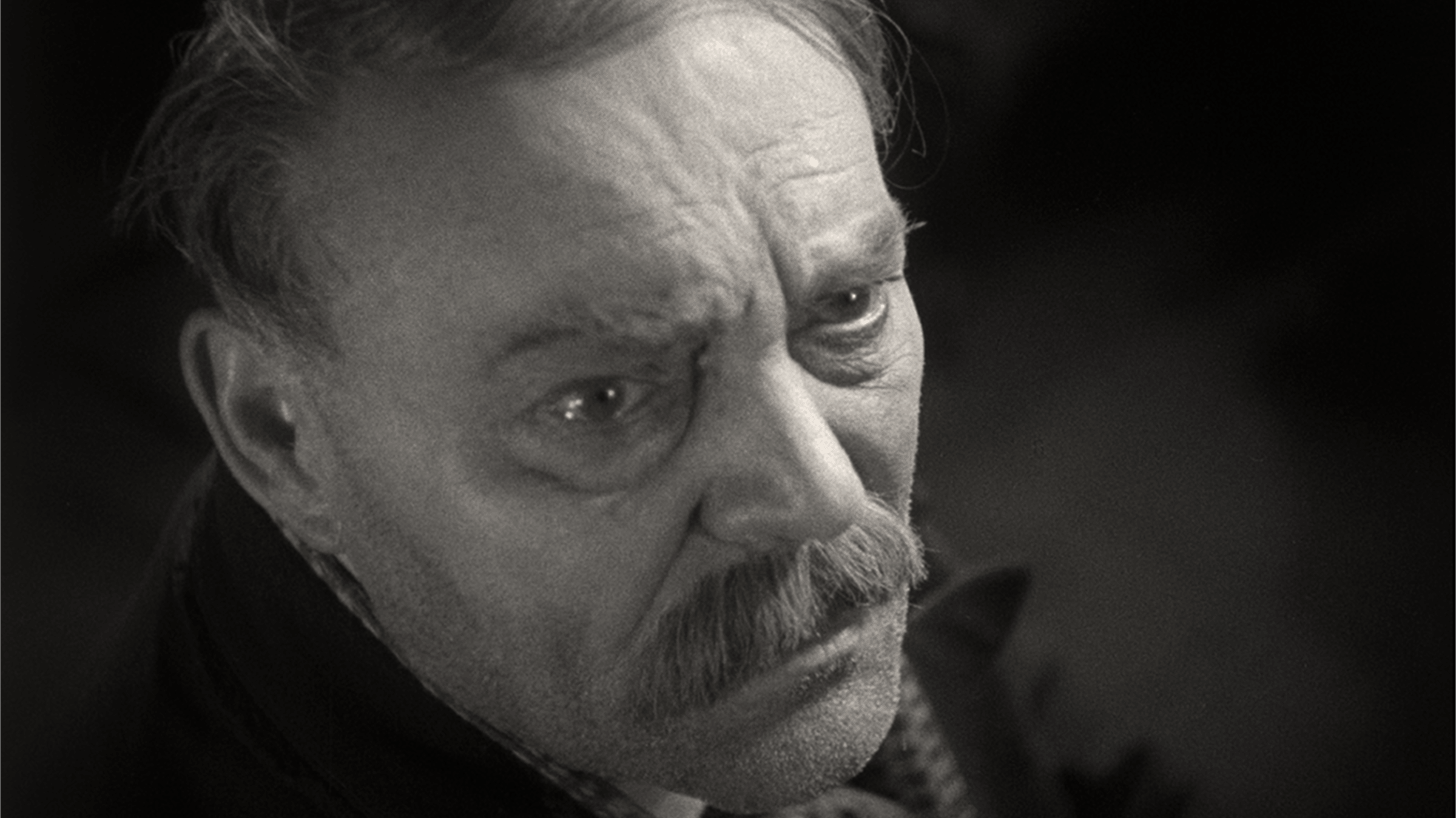
Kremke (Hermann Vallentin) is a tragic figure, but not a very sympathetic one. A corpulent Teutonic patriarch, he clings to old values even as they destroy him. Sitting around in a tavern quaffing steins of beer with his friends, he inveighs against unemployment insurance, which will lead to Bolshevism: “Are we supposed to work so that idlers can go for a stroll?” He insists that those who want work will always find it, setting up his firing in the next scene and his subsequent inability to find another job. Though one feels for his humiliation at his fraying clothes, repossessed furniture, and demeaning gig handing out flyers, his sclerotic fixation on status makes him react violently when his daughter Lene (Anna Sten) announces her engagement to Erwin (Ivan Koval-Samborsky), a mere truck-driver.
The socialist politics of director Marie Harder come through loud and clear, but the film is saved from heavy-handed didacticism by her deft and lively style in her first and only narrative feature. Born in 1898 as Maria Margarethe Harder, she was the daughter of a day laborer and a domestic worker; her education ended after grade school, and for a time she was a prison welfare worker. In Berlin, she became the manager of the German Social Democratic Party’s film and photo division, and directed her first documentary short, Der Weg einer Proletarierin (The Path of a Proletarian Woman) in 1929. Harder also worked as a journalist, writing for the SDP’s magazine Frauenwelt (Women’s World) and penning film reviews. In 1935, under the pseudonym Käte Kestien, she published her only novel, Als die Männer im Graben lagen (When Our Men Lay in the Trenches), about a mother laboring in an ammunition factory while her husband is away fighting in the First World War. Harder had lost several family members in the war and became a pacifist. Her disdain for militarism is evident in Bookkeeper Kremke; the protagonist is a veteran whose flat is decorated with swords and firearms, and when a parade of soldiers passes under the window, he dons his army cap and marches along proudly.
In opposition to Kremke is Erwin, the young, sturdy representative of proletarian resilience and optimism. His meet-cute with Lene comes when they collide in the street while he’s carrying a load of packages: their laughter as both tumble to the ground amid toppling boxes evokes joyful disruption and a capacity to roll with the punches. Erwin is, in fact, almost absurdly idealized: we see him being kind to dogs and small children and cheering his worried mother, after he has lost another job, by playing the accordion. But Koval-Samborsky, who had costarred with Sten back in the Soviet Union (in Boris Barnet’s comedy The Girl with the Hatbox) before both migrated to Germany, is so natural and warmly open-hearted that he sells the character. Erwin looks even better next to Lene’s weaselly fiancé, a snobbish student sporting a grotesque dueling scar.
Harder builds the film around a contrapuntal rhythm, moving back and forth between largely static sequences of Kremke in cramped, stuffy, dim-lit rooms—his office, his apartment, a pub—and fluid, kinetic street scenes that have the feel of a “city symphony.” They celebrate mobility and transience: the reflections of crowds passing like phantoms over shop windows, trams gliding along shining rails, couples foxtrotting in tea-rooms. Close-ups of passersby and low-angle shots of shabby tenements give the film the energy and texture of a documentary. The look and feel recalls People on Sunday, made the same year in Berlin by an extraordinary group of young men who all wound up as émigrés in Hollywood: Robert and Curt Siodmak, Edgar G. Ulmer, Billy Wilder, and Fred Zinnemann. The similarity is heightened when Lene and Erwin go on a Sunday outing to the country. We see them rowing on a lake, the camera keeping pace in an exhilarating fast traveling shot; lounging on the grass in gauzy, dappled sunlight; and splashing in the water. The plein-air freshness of these scenes creates the starkest contrast with the moth-eaten paralysis of Kremke, who cannot shake off his rigid, old-fashioned ideas.
To anyone who knows Anna Sten only as “Goldwyn’s Folly,” the punchline of jokes about her poor English, her luminous and down-to-earth presence will be a revelation. She is brunette (in Hollywood, Goldwyn would make her over as a blonde), and although—somewhat surprisingly given Harder’s feminism—the film does not emphasize Lene’s job, her no-nonsense wardrobe of neckties and simple suits advertises her as a working girl. Sten is especially charming in Lene’s affectionate, playful scenes with her younger sister. Bookkeeper Kremke was her first German film, but the Ukrainian-born actress had worked with many of the top Soviet directors and earned respect for the seriousness of her craft. She was one of a number of actors who immigrated to Germany in the late 1920s after Prometheus-Film, a branch of the USSR’s Mezhrabpomfilm, was created in response to new laws requiring foreign studios that wanted to distribute their films in Germany to also produce domestically. (Bookkeeper Kremke, however, was produced by Naturfilm Hubert Schonger, which specialized in documentaries and travelogues.)
In 1931, Sten’s talkie Der Mörder Dimitri Karamasoff (The Murderer Dmitri Karamazov) caught the eye of Samuel Goldwyn, who imported her to America certain he could turn her into the next Garbo or Dietrich. Had he handled her the way Selznick later did Ingrid Bergman, preserving her more natural beauty and promoting her as a skilled actress, she might have succeeded. But his attempts to make her glamorous and enigmatic merely stifled her natural talents, while an over-the-top publicity campaign and her heavy accent further alienated audiences, and all three of her Goldwyn films flopped. However, Sten remained in Hollywood, where offscreen she was beloved by all.
Tragically, Marie Harder died in 1936 in a plane crash near Popocatépetl, Mexico, under what have been described as “mysterious circumstances.” By this point, needless to say, the Social Democratic Party had been banned by the Nazis and Harder’s style of filmmaking was verboten. (Hermann Vallentin, who was Jewish, fled the country in 1933, and ultimately wound up in Tel Aviv.) Watching films from the late Weimar era is both poignant and suspenseful, like watching people skate on thin ice in the last rays of sun before an approaching storm front. Bookkeeper Kremke ends with an army of the unemployed marching, demanding jobs; soon they will be marching for another purpose, their economic grievances coopted for nationalist belligerence. A machine that threatens to replace human labor is not the only thing in this nearly century-old film that looks all too familiar.
Presented at SFSFF 2026 with live musical accompaniment by Guenter Buchwald and Frank Bockius