The reprint was published in conjunction with the screening of Blazing Days at SFSFF 2026
An excerpt from The Hollywood Posse: The Story of a Gallant Band of Horsemen Who Made Movie History by Diana Serra Cary describing here in vivid detail how studios found former cowboys like her dad, Jack Montgomery, to work in westerns.
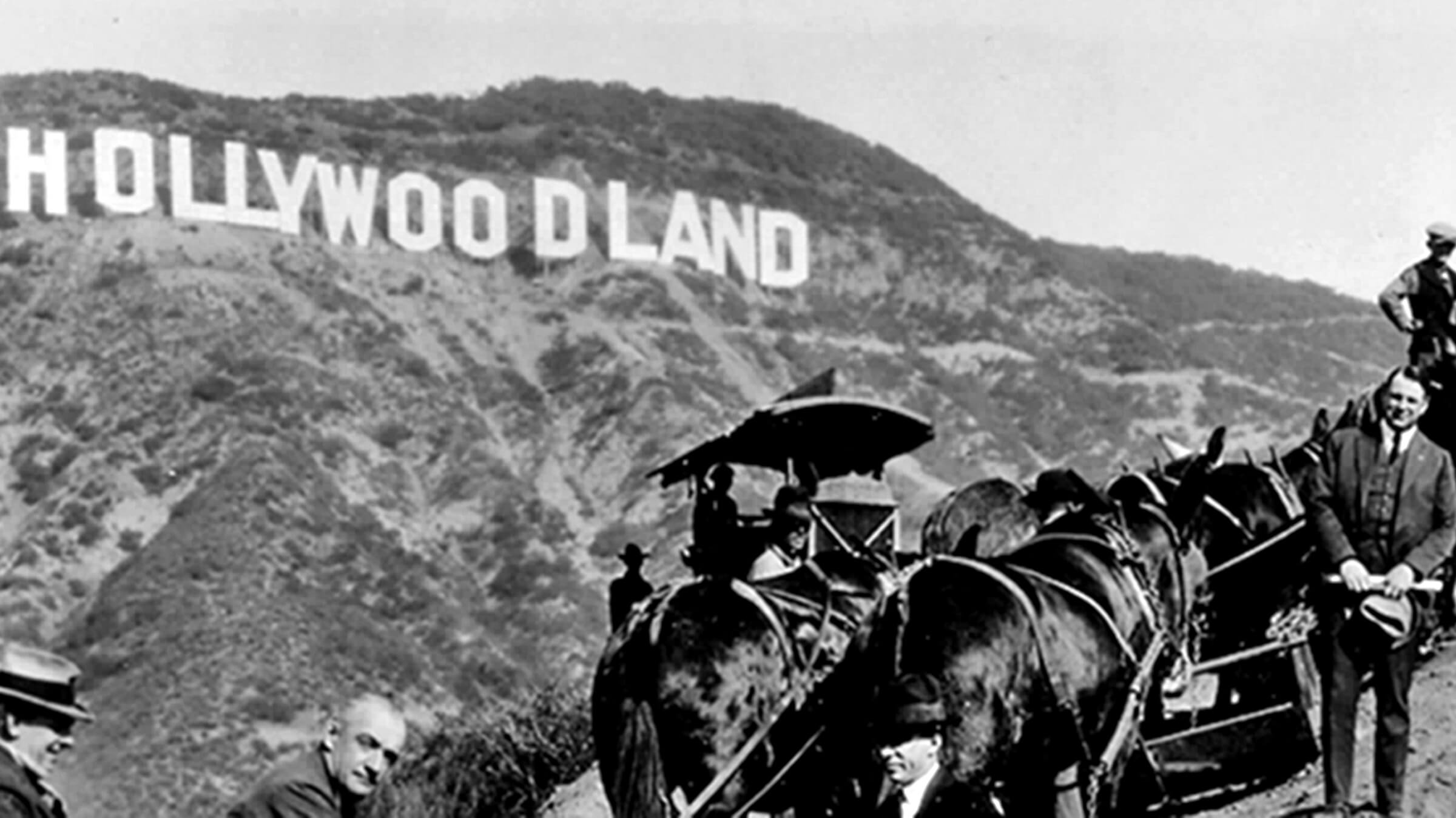
If many of the cowboys were happily surprised to discover Hollywood, producers and directors were equally delighted to encounter cowboys … [W]hat DeMille and his counterparts had to have to stay in business was a sizable band of expert horsemen. Moreover, these riders must be wholly without fear, nerveless enough to execute the most perilous stunt, fall, chase or battle scenes the imagination of a DeMille or Griffith could conceive. Assuming directors might locate such a singular group, there were two more conditions still to be met: one, the men must be chronically unemployed and thereby employable at a minute’s notice, and two, willing to gamble their lives, on a day to day basis, for whatever the studio heads decided they could afford to pay.
But where in this hamlet of only five thousand souls, most of whom were Iowa farmers and retired millionaires, could the great directors hope to find men to match their manuscripts? Fatefully, DeMille’s barn and the Waterhole’s back door were less than three blocks apart. Gradually it became known that a small colony of genuine cowboys, floating free or drifting through Hollywood, gathered in a small café they had made their headquarters. Some, like Thomas Ince, sent around a stand-by car to the Waterhole, knowing riders could be found there at almost any hour. It worked out well for both sides, for that way the cowboys could put their otherwise idle hours to profit, playing poker, and still be on hand if a job should materialize.
Universal came up with another primitive but ingenious way of holding cowboys in an available labor pool. They installed a large pen, fenced with wire, just inside the studio gates. Here, riders looking for picture work could pass an hour or an entire day, as they wished, awaiting the momentary appearance of a director in need of them.
“You just stake out your claim early in the morning,” Bill Gillis told Jack when the Mixville job ended. “And you wait ‘til some director finds out the script calls for cowboys. Hell, Monty some of these people shoot with no script at all—or with just a vague notion. They don’t even know they’re going to need riders until they get right on top of a scene.”
Slim also told Jack about the Sunset Barn, which was located just a block or so from the Waterhole. It was the place where the picture people, and especially cowboy stars, stabled their favorite horses.
Jack dropped around the Sunset Barn to get acquainted, but it was Universal’s hiring tank where he was picked up to stunt in a Neal Hart serial. That job opened the marvels of Carl Laemmle’s fabled universal city. If Mixville had seemed a functional little spread, Universal was impressive beyond any other Hollywood studio. The lot covered two hundred and thirty acres (more than twice the size of Mr. Wilcox’s original Hollywood) and it was a city in more than name alone. It boasted its own police force, fire department and street-cleaning crew, all nattily uniformed with “Universal City” emblazoned on tunic and helmet. There were libraries, greenhouses, schools, a hospital, mills, shops, forges, and an immense reservoir. A special spur of the Southern Pacific ran right on the lot. The two great restaurants could serve twelve hundred people between them, and the barns and corrals seemed endless. The tack room has enough gear to put the entire U.S. Cavalry into the field, together with an Indian army to fight it. In the big actors’ lounge, cowboys could be seen at all hours, playing cards at the round tables before the red brick fireplace.
There were three or four mammoth stages, eighty dressing rooms, and vast prop departments. Behind the stages and wardrobe sprawled the outdoor sets. Here were the sad-eyed brownstone fronts and brick tenements of the New York street. Beyond were the narrow lanes and slate roofs of Paris, where Lon Chaney was to make The Phantom of the Opera and The Hunchback of Notre Dame.
The Western street lay farther still, and then miles of open country beyond. Here Universal’s great herds of horses, mules, sheep and cattle by the hundreds grazed when not being used for picture work. The big buff-colored knoll that formed a backdrop for the lot also doubled as a handy location for Westerns, less than ten minutes from the front office. It was an everyday occurrence to look up and see a band of outlaws in hot pursuit of a careering stagecoach, or Indians chasing a lumbering covered wagon, around the flanks of this little hill. Unlike Mixville, where only one Western star reigned as king, Universal was an empire with half a dozen white-hatted heroes dividing the honors and the profits with owner Carl Laemmle. And out here the stars as well as the riding extras were genuine cowboys rather than showmen like Mix.
Reprinted with the kind permission of Mark Cary and the Diana Serra Cary estate.