
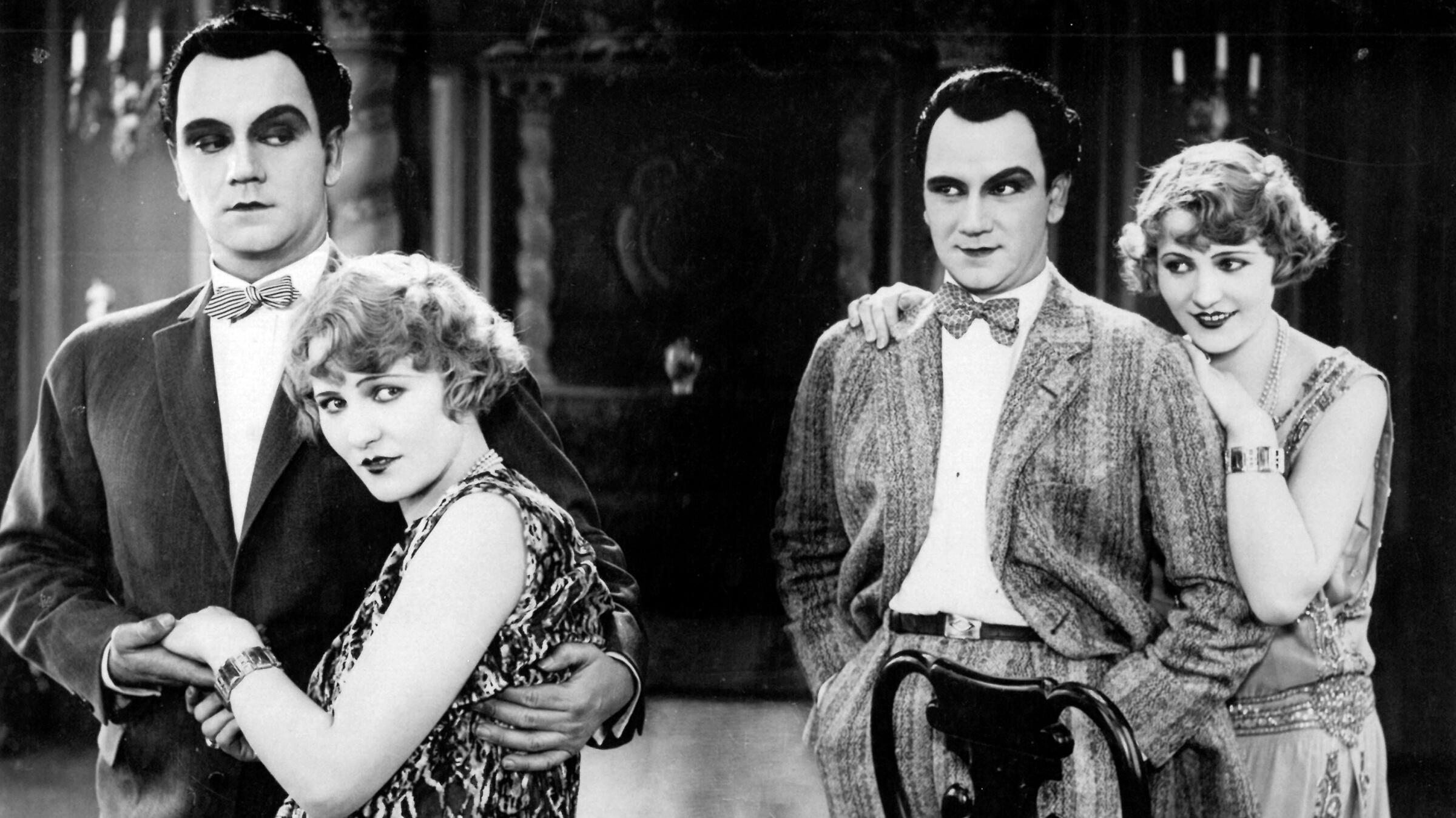
There are stars who become monuments, and there are stars who become mysteries. Harry Piel belongs to the second category—though in his own time he was anything but obscure. In the 1910s and 1920s, Piel was one of the most popular filmmakers in the German-speaking world and a figure of genuine international renown. A 1922 poll in Brazil’s Jornal do Recife ranked him among the most “sympathetic” performers and even among the world’s “greatest artists,” ahead of other internationally known names. Yet today, outside specialist circles, he remains largely unknown in North America.
The reasons are revealing. Piel never became canonized as an auteur in the later critical sense. He made genre films—crime thrillers, adventure spectacles, sensation pictures—that delighted audiences and filled theaters. He was a producer- director-actor who built projects around his own persona and understood cinema as an art of timing, movement, and risk. Precisely because of his popularity, because his films operated in the arena of mass entertainment rather than prestige art cinema, he was gradually pushed to the margins of film history. Recent scholarship and restoration work—particularly the sustained efforts surrounding the collections of the Filmmuseum Düsseldorf—have begun to give him his proper due for what he unmistakably was: a pioneering craftsman of action cinema and a major box-office force.
If Piel has often been described as a German Douglas Fairbanks, the comparison captures only part of his appeal. Like Fairbanks, he combined athleticism with charm, transforming physical daring into spectacle. But Piel’s screen persona carries a distinct tonal register: part genial trickster, part modern entrepreneur, occasionally shadowed by criminal ambiguity. His films revel in mechanical velocity—cars, chases, technological environments—while grounding their thrills in a self-aware playfulness. Piel did not merely perform stunts; he orchestrated cinematic situations in which danger, duplication, and deception are part of the fun.
His Greatest Bluff stands as one of the most illuminating examples of that orchestration. Piel plays twin brothers, Henry and Harry Devall, allowing him to divide and recombine his own screen identity. The premise is elegantly functional: Henry, entrusted with transporting valuable jewelry to Nice for the Rajah of Johore, is robbed en route. Harry, newly returned from America, steps in to help. The twins enter a labyrinth of disguises, imposture, and criminal maneuvering in pursuit of the stolen jewels and the gang responsible.
The film’s subtitle announces its genre with unapologetic clarity: The Twin Brothers. A Sensational Crook Affair, credited to screenwriter Henrik Galeen. His presence in the credits is more than a routine screenwriting assignment. By 1927, Galeen was already associated with some of the most visually and thematically ambitious works of German silent cinema, including The Golem, Nosferatu, Waxworks, and Alraune—films that later came to define the artistic reputation of the Weimar era. That he collaborated so fruitfully with Piel complicates any easy division between prestige art cinema and popular sensation film. In Piel’s universe, Galeen found a markedly lighter register: playful rather than portentous, swift rather than metaphysical. Yet the structural intelligence remains. His Greatest Bluff is built with the same narrative precision that animates Galeen’s darker scripts—careful doubling, concealed motives, the pleasure of revelation—only here the shadows give way to Riviera sunlight and criminal intrigue replaces existential dread. Contemporary accounts note that Galeen and Piel became close collaborators and fast friends, working together on several projects. Their partnership is a reminder that Weimar cinema’s creative community was fluid, not hierarchically divided. The writer of Germany’s most haunting nightmares could also craft its most exuberant entertainments. His subtitle’s phrase in the original German, sensationelle Gauner-Affäre, signals exactly what audiences could expect: intrigue, velocity, and narrative reversals.
But doubling is not merely a narrative device here; it is the film’s central aesthetic principle. Cinema itself is a medium of duplication—of bodies, of identities, of appearances that may or may not be authentic. Piel’s twin performance becomes a playful demonstration of the screen’s ability to multiply presence and blur distinction.
Contemporary trade commentary recognized the commercial power of this device. As Der Kinematograph observed in May 1927, whenever Harry Piel appeared doubled on screen, success was virtually assured. That remark speaks to a contract between star and spectator. Viewers did not simply follow the plot; they anticipated the pleasure of seeing Piel technically and performatively outwit himself.
His Greatest Bluff’s modernity is equally visible in its geography. Reviews praised the Riviera exteriors and, notably, the “brilliantly executed car scenes.” In Piel’s cinema, the automobile is never incidental. It is an emblem of tempo and risk, an instrument that translates technological modernity into visceral experience. Chases are not only narrative escalations; they are exhibitions of movement, proof that cinema can embody the speed of its time.
And then there is Marlene Dietrich.
In 1927, Dietrich had not yet become the global icon forged in collaboration with Josef von Sternberg. She was a working actress in the Weimar film industry, experimenting with screen presence and persona. In His Greatest Bluff, she plays Yvette, described in the original program notes as a “lady” who deploys her intellect and other qualities exclusively in the service of profitable ventures. Within the film’s web of deception, she is both participant and catalyst—an embodiment of elegance that is inseparable from opportunism.
What is striking, in retrospect, is how critics responded to her performance style. Der Kinematograph characterized her here with the phrase “a strange mannequin coquetry.” The formulation is wonderfully ambivalent: suggesting stylization, artifice, a self-conscious play with surface. It is not yet the fully crystallized Dietrich of The Blue Angel, but it is recognizably a performer who understands the camera as an accomplice in the construction of allure.
That this was the only film collaboration between Piel and Dietrich underscores the sense of a fleeting but revealing intersection. Yet the connection did not end there: Dietrich’s husband, Rudolf Sieber, worked as assistant director on several subsequent Piel productions between 1927 and 1930. The detail reminds us that Weimar cinema functioned through dense professional networks, and that Piel’s productions were embedded within an industry ecosystem that nurtured talent in multiple directions.
Watching His Greatest Bluff today, one is struck not only by its narrative efficiency but by its tonal confidence. The film never apologizes for wanting to entertain. It embraces the pleasures of disguise, pursuit, and revelation with a craftsman’s assurance. If later histories valued psychological depth or visual abstraction as markers of artistic seriousness, Piel offers a different proposition: that kinetic precision, audience rapport, and technical ingenuity are themselves artistic achievements.
For a North American audience, encountering Piel may feel like discovering a parallel branch of silent-era action cinema—one that evolved alongside Hollywood but developed its own rhythms and star systems. His films suggest that the global silent screen was not divided neatly into national traditions but connected by shared appetites for speed, suspense, and spectacle.
Restorations allow us to see that appetite again. They restore not only images but scale: the sense of Piel as a figure who once commanded international attention and whose name carried immediate recognition. His Greatest Bluff is more than a crime thriller; it is a key to understanding how popular cinema operated as a transnational language of excitement in the 1920s.
Harry Piel was not forgotten because he lacked impact. He was forgotten because his impact was too closely tied to popular pleasure—too efficient, too crowd-pleasing, too unembarrassed in its appeal. To bring him back into circulation is not an act of nostalgia but of recalibration. It reminds us that silent cinema’s vitality resided not only in canonical masterpieces but also in the films that made audiences gasp, laugh, and lean forward in their seats.
In that sense, His Greatest Bluff performs one final doubling. It is both a story about deception and an antidote to historical misrecognition. The bluff, it turns out, was not Piel’s—but ours, in assuming we already knew the full map of silent film history.
Presented at SFSFF 2026 with live musical accompaniment by Guenter Buchwald and Frank Bockius