
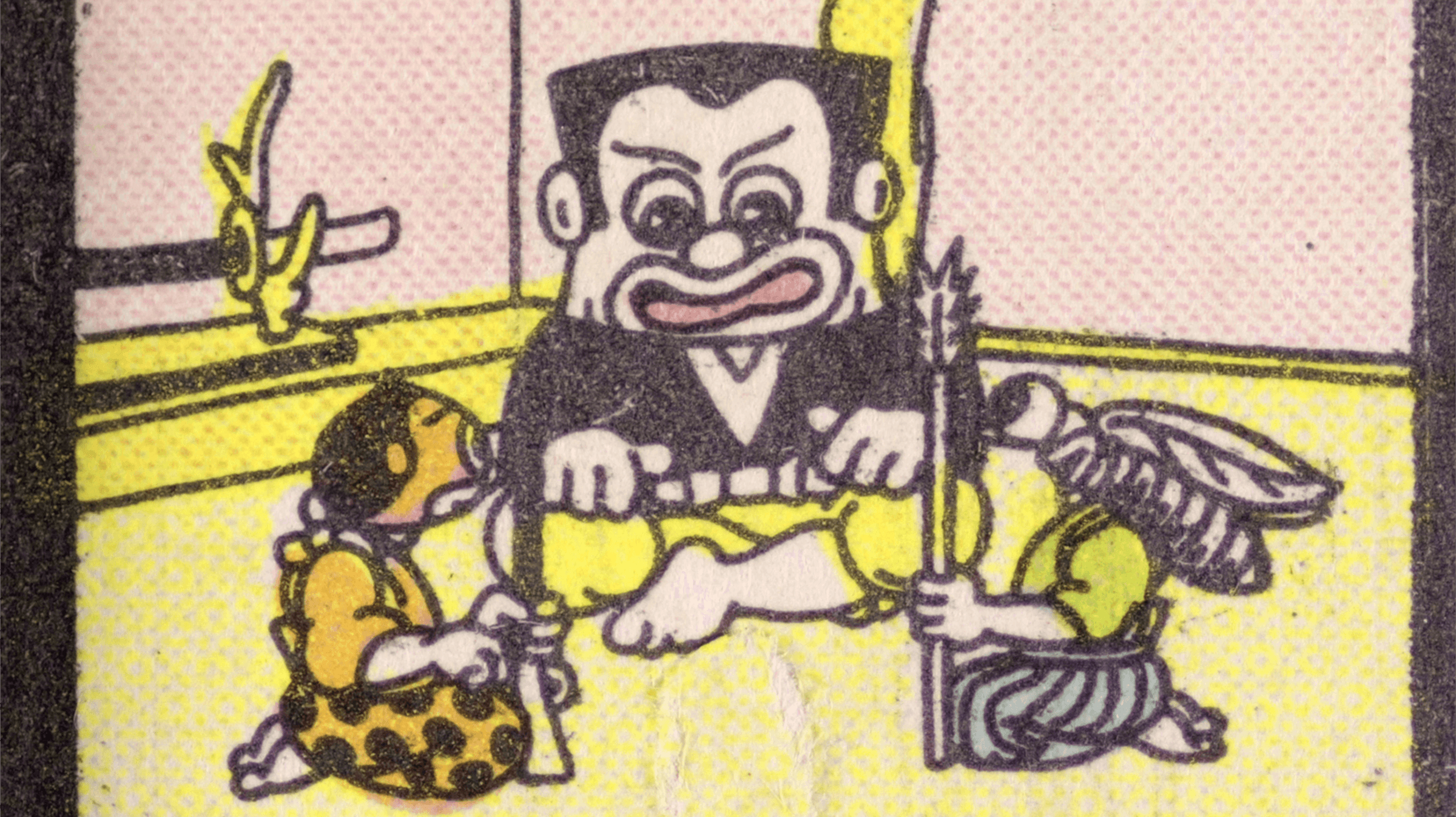
“Film” has been synonymous with “cinema” since W.K.L. Dickson used George Eastman’s Kodak Transparent Film to make pictures move on the Edison Kinetoscope in 1895. A roll of photosensitive emulsion coated on a flexible base of nitrate cellulose, Kodak Transparent Film had been introduced for still photography in 1889 by the Eastman Dry Plate and Film Co., which aimed to disrupt the dominance of the dry-plate negative among professional photographers. Eastman failed at supplanting the dry plate, but wound up creating a far larger and more lucrative market for film among amateur photographers and the motion picture industry to come. For the duration of the 20th century and into the first years of the 21st, everything was shot and projected on celluloid film, from Hollywood blockbusters to independent features, from TV commercials to 16mm and 8mm home movies, from stag films to military reconnaissance footage.
But what if celluloid film itself was all a mistake? Before Eastman settled on nitrate cellulose, he tried coating rolls of photographic emulsion onto paper. His paper-backed roll film, Kodak American Film, was manufactured from 1885 to 1895, then faded into obscurity as its younger sibling came to dominate the world and would today scarcely rate as a trivia teaser at the nerdiest bar in Rochester. Could there ever have been a cinema constructed from paper? Did the aesthetics of cinema arise from something intrinsic in nitrate film? Would a paper cinema have been different?
Thanks to the Japanese Paper Film Project, we’re not talking about an airy hypothetical, but a bona fide challenge to cinema as we know and define it. The project has successfully recovered the world of lost paper print movies made expressly to be exhibited on home projectors manufactured by Osaka’s Katei Toki and Tokyo’s REFCY and Tsukiboshi firms from 1932 to 1938. With the Japanese animation industry facing hard times, these firms bypassed theaters and took their wares directly to consumers. (Live-action films circulated on paper, too, but it’s the animated films that were the most innovative and charming.)
Toy projectors were common in the silent era, when last week’s film was deemed as disposable as last week’s newspaper. (How much trouble could kids get into with only a few feet of nitrate scrap?) The paper film projectors were different in several crucial respects. Rather than shining a light through transparent celluloid film and projecting an enlarged image onto a wall, these projectors bounced a light off the opaque strip and cast a reflected image. It was not a large image (at best, two feet wide) nor a very bright one (the lamp was only a hundred watts), but it moved!
The paper films could be ordered by catalog or bought at your local department store. Although paper condensations of feature films were available (apparently the 1932 MGM release, Tarzan the Ape Man, was popular among paper projectionists in Japan), many of the titles were made expressly for this market. Forgoing celluloid film also opened up possibilities not yet available in Japanese commercial cinema, such as color. To make a color film in Japan, a motion picture producer would have had to license Technicolor’s bulky and costly technology or relied on an imitator like Cinecolor. Without the constraint of photochemical emulsion, paper filmmakers adapted techniques from other arts and used photogravure and four-color offset printing to reproduce an impressive range of colors, seen vividly in titles such as Sutakora Sacchan’s Raccoon Dog Balloon and Kappa Odori.
The paper films also suggest something unbounded and open about their hybrid medium. It’s well known among silent cinema aficionados that films ran at different speeds back then, with correct projection frame-rates presenting an especially knotty problem for archivists and technicians everywhere. Yet the paper films, fed through the toy projector with a hand-crank, have no suggested frame rate, and confound any notion of a single correct projection speed. They could be shown as quickly or as slowly as the audience wanted. Intertitles, when printed at all, might be only a few frames, necessitating that the paper projectionist slow down and hold that image in place. Some paper films came with accompanying 78 rpm discs, suggesting that amateur paper projectionists could hand-crank their machines in some semblance of synchronicity with a phonograph.
The paper film industry encouraged another kind of manual dexterity, too. If you had a projector and tired of the films in your collection, you could also buy blank rolls of paper and create your own hand-drawn animations. It was certainly more economical than giving a kid a roll of Kodachrome and expecting them to set the right f-stops! One title in the program, Cell 2455, suggests the range of creative possibilities that amateur paper filmmakers explored when left to their own devices.
As much as the paper films challenge our received notions about what a film is and how it can be reproduced, the industry was, in other respects, just as mercenary as film hardware manufacturers anywhere in the world. The Kodak motion picture gauges—35mm, 16mm, 8mm—became universal standards used around the globe, while competitors that insisted upon odd widths, nonstandard perforation configurations, and curious advancement mechanisms to maintain a proprietary edge on the market eventually floundered. Alas, the paper film companies took the proprietary route: although both machines used paper strips roughly 27mm in width, the REFCY projector had a single perforation between each frame, while the Katei Toki projector was designed for paper strips with two perforations on the frameline. If you were a Katei Toki household and took your collection over to your REFCY neighbor, their projector would puncture and mutilate your paper films! (We can glimpse here the schism of non-interoperable cartridges between Nintendo and Sega five decades hence.)
In the end, it was the Japan’s ruling class’s relentless imperialism that extinguished this alternative avenue in cinema. The Second Sino-Japanese War, begun in earnest in July 1937, restricted the use of metal in domestic consumer products. The projectors could no longer be manufactured, and so the paper film caravan stopped supplying fresh product.
Many Japanese paper films—much like their nitrate brethren—did not survive World War II. Those that did inhabited an odd zone: toys made for children that had become too brittle for even adults to play with. The crudity of the toy projector mechanism may have been sufficient when the paper was new and pliable, but as the paper films aged, playing them back on the original equipment would be too destructive. They became largely a footnote until the Japanese Paper Film Project developed a scanner and software to digitize these delicate, sometimes literally threadbare artifacts. Working with major, hitherto inaccessible collections in Japan, such as Kyoto’s Toy Film Museum, the Japanese Paper Film Project has allowed these guileless experiments to move again.
So, would a paper cinema have been different? Eric Faden, lead producer of the Japanese Paper Film Project, has a suggestive answer: “When projected, paper films provide a different experience than traditional celluloid. Celluloid’s material base is meant to be literally transparent so that only the film’s content is visible. But paper films produce a surprising blend of smooth cinematic movement underscored by a patina of its ink-and-paper material base. The paper’s fibers, small creases, half tones, stray marks, and even the occasional fingerprint flicker by and produce a secondary layer of film … For audiences acclimated to a cinema that is digitally polished down to the pixel, paper films continuously remind us that they are watching an artisan craft with both moving images and moving paper.”
It’s only though looking at film on paper that we can fully appreciate film as film.
Presented at SFSFF 2026 with live musical accompaniment by Duo Yumeno
The film descriptions below are by Iaroslava Polusmak, adapted from the 2025 Pordenone Silent Film Festival catalog with translation work by Jake Klavonski, Elizabeth Armstrong, and Tohru Kawamoto.
Urashima Taro (c. 1932–1938) A fisherman rides a turtle atop the ocean waves then goes beneath the surface and meets a princess. Based on the folktale “Otogibanashi.”
Source Toy Film Museum
Flanders’ Tale: Stormy Night (1935) A boat is headed to Ostend when it gets caught in a storm. Beautifully rendered in black-and-white silhouettes. Source Toy Film Museum
Otsuki — Mr. Moon (1935) In a nod to the folktale “The Rabbit on the Moon,” tanuki (raccoon dogs) celebrate the moonrise while the rabbit makes mochi. Source Toy Film Museum
Paradise on a Deserted Island, Part I (1933) Live-action footage of seagulls, with a time-lapse sequence of a hatching egg. Source Toy Film Museum
Daichushingura (The 47 Ronin), Part II (c. 1932–1938) These dramatic (mostly fight) scenes are believed to be all that survives of the live-action Genroku Kaikyo Daichushingura, a 47 Ronin adaptation directed by Tomiyasu Ikeda and starring Denjiro Okochi. Source Machiko Kusahara Collection
Limited Express Chushingura, Parts I and II (1935, with sound) A comical reimagining of the 47 Ronin avenging their master‘s death transposed to modern times. The soundtrack combines Edo-period music with the noises from devices like cameras, motorcycles, and cars. Source Toy Film Museum
Sutakora Sacchan’s Raccoon Dog Balloon (c. 1932–1938) Sacchan inflates a balloon that turns into a living tanuki. Based on the tomboy manga character created by Suiho Tagawa. Source Toy Film Museum
Sutakora Sacchan Big Win (c. 1932–1938) Sacchan goes to a boxing match and decides to become a contender. Source Natsuki Matsumoto Collection
Norakuro – The Hot Air Balloon (c. 1932–1938) Norakuro accidently strands his friend on a hot-air balloon and tries different ways to save him. Based on the orphan dog character by manga artist Suiho Tagawa, who was himself inspired by Felix the Cat. Source Natsuki Matsumoto Collection
Train Trip (c. 1932–1938) A train puffs its way through the blue-inked countryside. Source Toy Film Museum
The Japanese Alps – Mt. Hakuba (c. 1932–1938) Live-action nature film about Shirouma Mountain and the town of Hakuba, part of the Chubu-Sangaku National Park established in 1934. Source Kyoritsu Women’s University, Yo Sato Laboratory
First Line of National Defense (1934) Live-action footage of indigenous Pacific Islanders. Source Natsuki Matsumoto Collection
Ponsuke’s Shapeshifting Training (1938) Ponsuke laments over his inability to shapeshift. Based on the popular 1934 character by animator Ikuo Oishi, who is sometimes referred to as Japan’s Disney. Source Natsuki Matsumoto Collection
Cell 2455, Death Row (c. 1955) An amateur handmade film found on the reverse side of another paper film that recreates a chase scene from 1955’s Cell 2455, Death Row, a Columbia Pictures noir starring Kathryn Grant and William Campbell. Source Natsuki Matsumoto Collection
Fishin’ Around (1936) Reffie defies a “No Fishing” sign and ends up duking it out underwater with an octopus. Source Natsuki Matsumoto Collection
The Unbeatable Ohei’s Bandit Extermination (1933) While on an evening stroll, the “unbeatable” samurai Ohei is ambushed by bandits from Japanese history and mythology, including the legendary Monk Sohei and a three-eyed Oni (demon). Source Natsuki Matsumoto Collection
The Unbeatable Ohei’s Kappa Dance (1936) Ohei defeats several bandits to return the stolen head-dish, or “sara,” to a kappa (a mythical water creature whose sara holds its strength). Tange Sazen, the one-eyed, one-armed samurai swordsman created in 1927 by Hayashi Fubo makes a cameo. Source Natsuki Matsumoto Collection
Kappa Odori (c. 1933–1938) After Ohei returns the stolen sara to its rightful kappa, the kappa king announces a celebration and the water creatures play drums and dance. The film’s intertitles probably reference the popular 1933 song “Tokyo Ondo.” Source Machiko Kusahara Collection
Gold Rush (c. 1932–1938) Tanuki stows away on the ship in search of a mysterious treasure. Source Natsuki Matsumoto Collection
Tonkichi’s Adventure (c. 1932–1938) Flying through the sky in a plane, Tonkichi falls out and encounters a host of wild animals that include a whale, a lion, and a monkey. Just as a crocodile starts to swallow him, he wakes up in his own bed. Source Natsuki Matsumoto Collection
The Battle of Monkey and Crab (c. 1932–1938) When a monkey samurai kills a crab samurai, the crab’s offspring take revenge with the help of friends. Based on an Edo-period folktale. Source Kyoritsu Women’s University, Yo Sato Laboratory
Flower Garden Dance (c. 1932–1938) A girl buys some flowers and a fairy offers to enchant them. Source Natsuki Matsumoto Collection
Treasure Chest (c. 1932–1938) A tiger and a bear agree to a race to determine who gets the treasure chest they’ve both found—then a bird happens by. Source Toy Film Museum
Animal Olympics, Parts I and II (1935, with sound) A variety of animals vie for Olympic medals in different sports, complete with an announcer and opening ceremony. Source Toy Film Museum
Raccoon Dog Belly Drumming (c. 1932–1938) A clown brings several tanuki to life, but one skinny one cannot drum its belly. He finds a pump, inflates himself, and flies away, floating over Tokyo until he replaces the statue of famous 19th-century samurai hero Saigo Takamori. Source Ashiya Kogan Collection