THE CLOWN was preceded by Asta Nielsen’s debut film THE ABYSS (Afgrunden, 1910, directed by Urban Gad and costarring Paul Reumert, 38 min.) also from the Danish Film Institute.
On March 16, 1917, the world was stunned by news of the sudden, unexplained death of the Danish actor Valdemar Psilander, just thirty-two years old. Since making his film debut in 1910, Psilander had starred in more than five dozen films (with twenty more on Nordisk’s shelves awaiting release) and had been voted one of the most popular cinema stars in the mid-1910s in countries as disparate as Germany, Brazil, and Russia. When The Clown premiered in the Victoria Theater in Copenhagen less than two months after Psilander’s untimely death, his masterful performance as the charming but vulnerable clown Joe Higgins reminded audiences of what they had lost. It’s an unusual role for Psilander, who was most often cast as a nobleman or upper-middle-class professional, and one that gave him the opportunity to showcase his emotional versatility and expressivity. Psilander’s clown exemplifies legendary contemporary clown “Avner the Eccentric” Eisenberg’s maxim that “good clowns can make you laugh, but great clowns can make you cry, too.”
Early moving pictures exhibited at fairgrounds and vaudeville shows often featured spectacular stunts and acrobatic feats. As silent films left the circus tent behind and moved into cinema palaces, directors began to turn their attention from the acts in the circus ring to the lives of the people performing them. As The Clown shows, by changing focus from the spectacle out front to the drama backstage, films can illuminate the gap between appearance and reality that underpins both circus feats and cinematic magic. These films tend toward the melodramatic, featuring love triangles, impoverished noblemen, and criminal intrigue, but they also compress space and time to give audiences access to events that transcend the confines of the tent. Circus melodramas are often both exhibitionist and voyeuristic, showing spectacular feats by trapeze artists, acrobats, and clowns, while also pulling back the curtains for an intimate look at performers’ lives. Many countries made circus films in the silent era, but Nordisk Films Kompagni, Denmark’s leading film producer and the second largest film exporter in the world in the years before World War I, used a circus setting for so many of its films that the studio built a permanent circus ring at their headquarters in Valby.
Rather surprisingly, the prolific Psilander only appeared in two circus films. The earlier of the two is a sensation film, 1912’s Dødsspring til Hest fra Cirkuskuplen (The Great Circus Catastrophe), in which Psilander’s character, Count Willy von Rosenörn, makes a suicidal leap on horseback from the top of the circus tent to impress the circus manager’s lover. The Clown, on the other hand, is much more concerned with the interior life of his character, the clown Joe Higgins. As the film begins, the circus troupe is struggling to make a profit, but circus director Bunding (Peter Fjelstrup), his wife (Amanda Lund), his daughter Daisy (Gudrun Houlberg), and Joe are clearly content with their simple life, filled with backstage laughter, camaraderie, and a budding romance between Joe and Daisy. When Joe makes it big and takes them all to the big city, their happiness dissolves. Daisy has an affair with an abusive nobleman, Count Henri (Robert Schmidt), and breaks Joe’s heart. When Henri abandons her and her parents turn her away, she drowns herself, and Joe vows revenge on the man responsible. The film ends where it began, in a circus tent, with Joe avenging Daisy and being reunited with her in death after a well-timed heart attack.
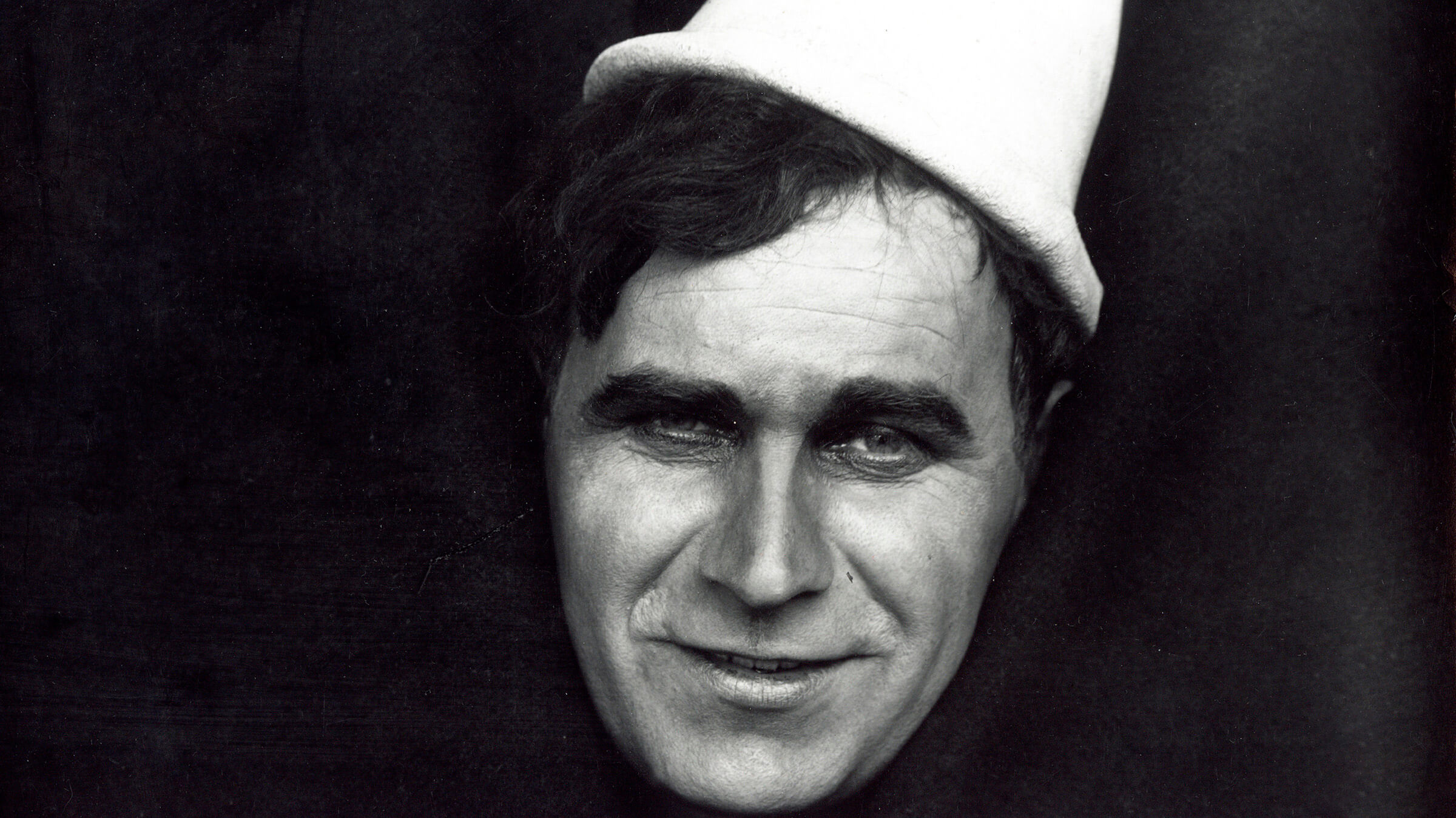
As the clown of the title, Joe dominates both the circus show and the film with the range and depth of his emotions. In the opening scenes, he is relaxed and laughing, which few of Psilander’s characters ever get to do, but by the end of the film, he has been visibly humbled by sorrow and loss. The film is bookended by two close-up shots of Joe’s face, framed by the curtains as he peers out from the backstage world into the circus ring. In the first, he watches Daisy’s equestrian performance with expectation and admiration, and the camera makes us feels almost as if we are watching her through Joe’s delighted eyes. The second, near the end of the film, shows him looking through a similar curtain many years later, seized by dismay and rage when he spots Henri in the audience. This stark contrast, particularly evident in Joe’s expressive eyes, illustrates the disconnect between appearance and reality that the film has been exploring, between the wonders of the circus ring and the trials its performers may be enduring.
Psilander’s nuanced portrayal of Joe Higgins draws on the commedia dell’arte tradition of Pierrot, the lovesick whiteface clown. In his first appearance in the ring, Joe wears a classic Pierrot outfit of patterned knee-length jumpsuit and felt dunce cap as he performs a song on the banjo about Pierrot’s hopeless love for Columbine. Although inaudible to the cinema audience, the song, interspersed with close-ups of Joe’s smiling and then sorrowful face, fills ninety seconds of the film’s sixty-one minutes, confirming how central Joe’s emotional life will be to the plot. This performance attracts the attention of a music hall impresario in the city who gives Joe his big break. In his new theater, Joe wears a shiny, tight-fitting costume with a wide ruffled neck and three peacock feathers in his cap. This flashy new garb is not just an ostentatious sign of his success; it also reflects how much harder he has to work to create the mirth that came so effortlessly before. Many years later, back on the traveling circuit, heartbroken and morose, he wears a baggy, polka- dotted jumpsuit and felt cap once more.
Just as in Psilander’s 1911 breakthrough film Ved fængslets port (Temptations of a Great City), The Clown uses mirrors, a familiar silent-era device, to create moments of exposure and reflection. The most striking of these frames Joe’s discovery of Daisy’s unfaithfulness. He is sitting at a table backstage, reading his lucrative new contract, at the pinnacle of his success, when a set change behind him reveals Daisy and her lover reflected in the mirror across from where Joe is sitting. He looks up, sees the couple embracing, and throws a candlestick at the mirror to destroy the reflection before lurching away in shock. This revelation destroys Joe’s peace of mind and reminds the audience that things are rarely as they seem, on stage or off.
The Clown was the first of Psilander’s films to be released after his death and almost eerily echoes the many paradoxes in the actor’s own life. The character Joe Higgins is simultaneously the center of attention and a socially marginal figure, a skilled artist in public and a tormented soul in private, joyfully in love and shattered by loss. In real life, Psilander was outwardly celebrated but inwardly struggling. While playing the faithful lover on screen, he was in the process of divorcing the wife he had been cheating on with his costar. Nordisk touted him as their most famous star, but he had just left them to start his own production company. He was the highest paid actor in Danish film history, but he had fewer than two hundred Danish kroner to his name when he died. If A.E. Housman’s 1896 poem “To an Athlete Dying Young” is to be believed, Psilander’s early death, at the peak of his fame, should have cemented his legendary status, as it did for Rudolph Valentino a decade later, but instead, he was rapidly and utterly forgotten. Nordisk even remade The Clown in 1926, with the same director and a new star, the Swede Gösta Ekman. Watching the original film gives audiences today intimate access to not just Joe Higgins’s tragic story but also Psilander’s own.
Presented at SFSFF 2026 with live musical accompaniment by Guenter Buchwald and Mas Koga