
The Wreck of the Hesperus most likely would have never been produced without the convergence of several closely timed events. The initial push came with the ousting of film director Cecil B. DeMille from the Famous Players-Lasky film company. DeMille had been with them since 1916, when Adolph Zukor’s Famous Players Company merged with the Jessie L. Lasky Feature Play Company. DeMille and Jesse Lasky went back even further, to their first film collaboration, The Squaw Man (1914), which DeMille codirected with Oscar Apfel. In December 1924, DeMille’s contract was up for renewal, but the three men could not reach a new agreement, and DeMille was out.
DeMille wasted no time. He heard about an old production company, Producers Distributing Corporation (P.D.C.), that was going through a reorganization. They needed product, and DeMille needed a way to finance his films. With any other existing studio, DeMille would have been just another director on the roster, but with P.D.C., DeMille could run his own show. An agreement was made and DeMille was named director general, the same position he had held at Famous Player-Lasky. Now DeMille could supervise a wide variety of productions while directing two of his own specials.
With financing in place, DeMille purchased the Thomas H. Ince studio in Culver City. Ince had died of a heart attack in November 1924, and the thirty-two-acre production complex was perfect for DeMille’s needs. For the first season of 1925–26, DeMille Pictures Inc., produced ten features with various directors, and DeMille made The Road to Yesterday and The Volga Boatman. For the next season, fifteen features were produced and DeMille made The Yankee Clipper and The King of Kings. For the third year of 1927–28, the output increased to twenty-five features and DeMille directed The Godless Girl.
It was during this third hectic season that The Wreck of the Hesperus was born. In May 1927, DeMille hired newspaper columnist and sometime studio consultant Harry Carr as editorial advisor, who came up with the idea of picturizing Henry Wadsworth Longfellow’s well-known twenty-two stanza poem “The Wreck of the Hesperus.”
John Farrow, a newcomer to films, was chosen to write the script, essentially creating a whole backstory leading up to the dramatic final sequence of the captain’s daughter lashed to a mast as the sailing ship is torn to pieces. Farrow (father of actress Mia Farrow) only had one previous film credit, writing titles for White Gold (1927), another DeMille Pictures production. It took him ten years to leverage his skill into directing films.
Elmer Clifton directed The Wreck of the Hesperus. In contrast to Farrow, Clifton had extensive experience as an actor, writer, and director by this time. He entered films as an actor in 1912 at the age of twenty-two. Two years later, he developed an interest in directing after joining the Fine Arts studio in Hollywood when famed director D.W. Griffith was in charge. Clifton eventually became one of Griffith’s assistants, and this accelerated his desire to direct. Clifton recalled in a Picture-Play magazine article from 1924, “Anybody who worked around Griffith would want to direct. And no wonder. He made the job of directing a combination of all a boy’s dreams of adventure and an inventor’s quest of new fields to conquer. He never talked to any of us about directing that I can remember, but every man on the lot was so impressed by his absolute concentration on his work that they wanted to try it.”
Clifton repeatedly asked Griffith for a directing assignment. It wasn’t until Griffith was away in New York for the premiere of Intolerance that studio manager Frank Woods finally granted Clifton’s wish, but added Joseph Henabery as codirector. Henabery, who had just directed his first feature, Children of the Feud (1916), a couple months before, was sympathetic, and when production on Her Official Fathers (1917) started, Henabery was stricken with “appendicitis” and remained so until production was done. Both films starred Dorothy Gish, and there must have been some chemistry between Gish and Clifton, for the two worked together on ten features from 1917 to 1920.
Clifton left Hollywood to direct Down to the Sea in Ships (1922), and it became his career achievement. Independently financed and filmed on location in New Bedford, Massachusetts, it was a spectacular period tale of 1800s whalers in a small Quaker town. The intimacy of working together on the project inspired the young leads, Raymond McKee and Marguerite Courtot, to marry not long after the film was released and gave actress Clara Bow her breakthrough in films.
Riding high from this production, Clifton was signed by Fox Film. His second picture was a prestige project, The Warrens of Virginia, a remake of the 1914 Cecil B. DeMille film. Cecil’s brother, William de Mille, wrote the Civil War scenario, based on his own play of the same name, first produced on Broadway in 1907. Three weeks into production, on location in San Antonio, Texas, the lead actress, Martha Mansfield, was sitting in a car between shots when someone must have lit a cigarette and carelessly tossed the lit match into the car, catching her crinoline dress on fire. The fire was put out, but it had done its damage; she died the next day. If this lost film is remembered at all today, it is for this tragedy. But Clifton managed to finish it and continue his career. He quickly came to mind for The Wreck of the Hesperus.
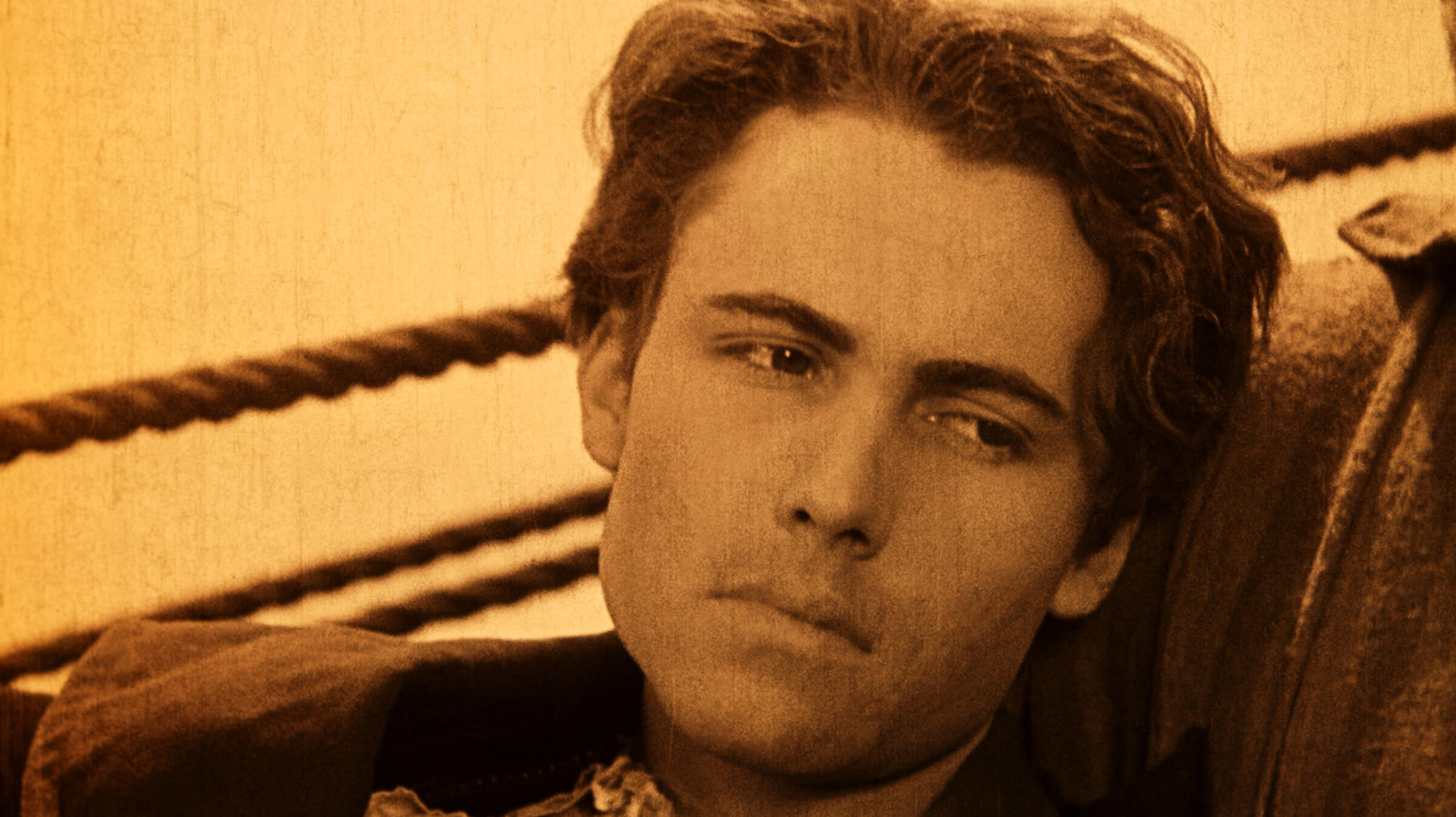
The Wreck of the Hesperus was designed to boost two new romantic leads, Virginia Bradford and Frank Marion (Francis Marion Jacobberger), after their previous picture for DeMille Pictures, The Country Doctor (1927), as the juvenile leads. They never did click with audiences, but the film was peppered with stalwart veterans—Alan Hale, Francis Ford, Slim Summerville, and Sam De Grasse. The film’s true attraction, though, was the shipboard scenes and the wreck itself. Clifton’s skill was invaluable as he and cinematographer John Mescall blended the open sea at Catalina Channel, miniatures, and studio sets into a seamless sequence showing the power of nature as the sailing ship smashes to pieces.
No difficulties were reported during the making of the film, which took a little over three months from start to release, but just hours after the studio shots wrapped the set was accidently destroyed by fire, and the whole studio stage building was destroyed. Reviews were mixed, but there was near unanimous praise for the dramatic finish. The film cost just under $218,000 to make, but grossed only about $266,000, far short of any profitable outcome.
Except for the films DeMille personally directed, the rest of the DeMille Pictures output that season fared no better, and he decided to get out of the studio business. He sold out his share of P.D.C. to Pathé, left the Culver City studio in its hands, and signed a three-picture contract with MGM. Eventually DeMille returned to his roots at the former Famous Players-Lasky Company, but now Adolph Zukor was in charge, and Jesse Lasky was out. The company took over their distribution arm name, Paramount Pictures, and DeMille spent the rest of his long career there.
Clifton directed one more film for DeMille Pictures, Let ‘Er Go Gallegher (1927), then entered the ranks of Poverty Row productions and B-westerns as a director and writer, working steadily all through the 1930s and ’40s. On his last film, Not Wanted (1949), written and coproduced by actress Ida Lupino, Clifton had a heart attack three days into the eight-day production. Lupino faced a dilemma, as she recalled in a 1966 interview: “We literally didn’t have the money to replace him—our company was held together with spit and safety pins. It was a question of my directing the picture or chucking it.” Lupino took on her first directing effort, and let Clifton take the credit. He died before the film was released, but his output was so prolific that several of his western productions didn’t come out until more than a year after his death. As the career of Elmer Clifton came to an end, a new direction began in the professional life of Ida Lupino.
Presented at SFSFF with live musical accompaniment by Guenter Buchwald, Sascha Jacobsen, and Mas Koga